
Landscaping Around Your AC Unit Without Killing Your Airflow in Chastain Park
Your AC condenser needs breathing room. That sleek outdoor unit humming on your Chastain Park patio does more than cool your home—it pulls in massive amounts of air through its coil to dump heat outside. Block that airflow and your system works harder, costs more to run, and can fail years early. Yet homeowners in Buckhead and Sandy Springs want beautiful yards, not metal boxes sticking out like sore thumbs. The trick is designing landscaping that hides the unit without choking it. Comparing Costs for a New AC Unit in Sandy Springs.
Why Airflow Matters More Than You Think
Condenser coils release heat by drawing air across them. If plants crowd the unit, airflow drops and the system’s efficiency falls by up to 15 percent. That means longer run times, higher power bills, and more wear on the compressor. In Atlanta’s humid summers, restricted airflow can cause the unit to overheat and shut down on the hottest day of the year. Give your AC two to three feet of clearance on all sides and at least five feet above the top. This breathing room keeps energy costs down and prevents expensive repairs. EPA energy efficiency guidelines.
The 2-3 Foot Clearance Rule Explained
Think of your condenser as a big radiator. It needs open space to pull in air from every direction. Two feet is the bare minimum for airflow. Three feet is better and gives technicians room to service the unit. Above the unit, leave five feet of vertical clearance so hot air can escape upward without hitting tree branches or a low deck. Measure from the unit’s outer casing, not the concrete pad. If you install a privacy screen, make it louvered or lattice so air passes through instead of bouncing back.
Best Plants for Atlanta’s Heat and Humidity
Choose plants that can handle Zone 8a heat without dropping tons of leaves or needles into the coil. Evergreen shrubs like dwarf yaupon holly, abelia, and wax myrtle stay tidy year-round and won’t clog fins. Ornamental grasses such as muhly grass or fountain grass add texture but keep them at least three feet away so they don’t grow into the clearance zone. Avoid deciduous trees near the unit; falling leaves in autumn mean frequent coil cleaning. If you want flowers, try lantana or coneflower—they thrive in heat, attract pollinators, and don’t shed much debris.
Ground Cover Options That Won’t Harm Your System
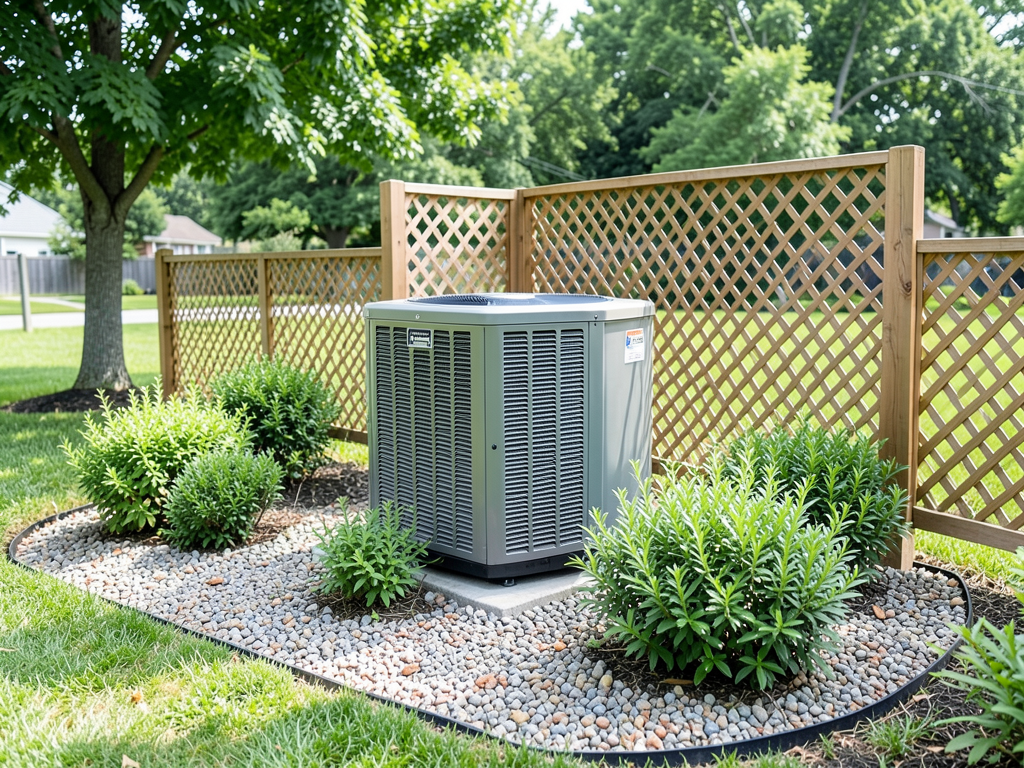
Grass growing right up to the unit means mowing too close and risking bent coil fins. Replace turf with a three-foot band of crushed stone or pea gravel. This stops weeds, improves drainage after Atlanta’s heavy thunderstorms, and keeps soil from splashing mud onto the coil. For a cleaner look, install concrete pavers in a grid pattern with gravel between them. Avoid organic mulch right next to the unit; it holds moisture and can attract termites or ants that may find their way into electrical components.
Privacy Screens That Let Air Flow
A solid fence around your condenser traps hot air and kills efficiency. Instead, build a three-sided screen using lattice panels or horizontal louvers. Leave the front open for service access and point the slats to direct rising hot air upward. Paint or stain the wood to match your home’s trim so it blends in. For a modern look, use powder-coated aluminum slats that resist rust in Atlanta’s humidity. Keep the screen at least three feet from the unit so air can move freely through the gaps.
Seasonal Maintenance Tips for Atlanta Homeowners
Atlanta’s long growing season means your landscaping never really stops. In spring, rinse pollen off the coil with a garden hose on gentle spray—never a pressure washer, which can bend fins. Autumn brings falling leaves; clear them weekly so they don’t pile against the unit. After summer thunderstorms, check that heavy rain hasn’t washed soil or mulch into the clearance zone. Once a year, trim back any plants that have grown inside the three-foot boundary. If you see bent fins or notice the unit running longer than usual, call a pro before minor blockage becomes a major repair.
Hardscaping vs. Softscaping: Which Protects Your AC?
Hardscaping—gravel, pavers, or a small patio pad—creates a permanent barrier against weeds and moisture. It also gives technicians a clean surface to stand on during repairs. Softscaping with well-chosen plants can look softer and more natural, but it requires more upkeep to keep growth in check. In Chastain Park’s upscale neighborhoods, many homeowners use a hybrid approach: a gravel bed with a few strategically placed shrubs that stay within bounds. This balances aesthetics with the mechanical needs of the system.
Common Mistakes That Cost You Money
Planting too close is the biggest error. Even a small bush can block 20 percent of airflow if it leans against the unit. Another mistake is using solid decorative walls; they look nice but trap heat. Mulch volcanoes around the base hold moisture against the metal casing, speeding rust. Letting vines climb the unit seems charming but blocks vents and can pull wires loose. Finally, ignoring the five-foot overhead clearance means hot air recirculates down into the coil, forcing it to work twice as hard.
When to Call a Professional
If your AC runs constantly but your home stays warm, restricted airflow might be the culprit. A technician can measure static pressure across the coil to confirm. If plants have grown through the guard and bent fins, cleaning or straightening them requires special tools. After a major storm, check for debris lodged in the fan or for the pad to have settled unevenly—common in Georgia’s red clay soil. Annual tune-ups should include a coil inspection and airflow test, especially if you’ve recently changed your landscaping.
Local Building and HOA Considerations
Atlanta’s building code doesn’t mandate specific distances for landscaping, but HVAC manufacturers specify clearances in their installation manuals—ignoring them can void your warranty. Some Buckhead and Sandy Springs HOAs have rules about visible equipment, so check before building screens or planting tall shrubs. If you live in a historic district, you may need approval for any hardscaping near the unit. Always call 811 before digging to avoid hitting buried lines, a step often skipped in DIY projects.
Balancing Beauty and Efficiency in Your Yard
The goal is a yard that looks polished without sacrificing comfort. Start by marking a three-foot buffer around the condenser with spray paint or rope. Then design your beds, paths, or screens outside that zone. Use color and texture to draw the eye away from the unit—tall grasses or a small tree at the back of the bed can shift focus. In Chastain Park’s mature neighborhoods, many homes use layered plantings that hide utilities without crowding them. The result is a clean, intentional look that also keeps your AC running at peak efficiency.
Frequently Asked Questions
Can I plant flowers right next to my AC unit?
Keep flowers at least three feet away to maintain airflow. Choose low-debris varieties like lantana or coneflower that won’t drop leaves into the coil.
Will a shade structure help my AC run cooler?
Shade can reduce the unit’s temperature slightly, but only if it’s open overhead. A solid roof traps heat and hurts efficiency.
How often should I clean the area around my condenser?
Check it monthly during growing season and after storms. A quick rinse of the coil in spring removes pollen buildup common in Atlanta.
Does mulch around the base cause problems?
Organic mulch holds moisture and can attract pests. Keep it at least two feet away or use gravel instead.
What’s the best way to hide my AC without blocking it?
Use a three-sided lattice or louvered screen set three feet away, leaving the front open for service access.
Protect Your Investment Year-Round
Good landscaping protects your AC and boosts your home’s curb appeal. Bad landscaping costs you money every month in higher energy bills and can lead to mid-summer breakdowns. In Atlanta’s heat, that’s a risk no homeowner wants to take. If you’re unsure whether your plants or screens are too close, a quick inspection can save you from costly repairs later. Give your system the space it needs, choose the right plants, and enjoy both a beautiful yard and reliable cooling all season long.
Need help making sure your AC has the breathing room it needs? Call Summit HVAC Atlanta today at (770) 600-9611 for a professional inspection and keep your system running at peak efficiency. For more information, visit USDA plant hardiness zone information.
You may also find this helpful. Managing Outdoor HVAC Noise and Vibration for College Park Homes near the Airport.
You may also find this helpful. Quiet AC Solutions That Meet Virginia-Highland Property Line Noise Rules.
{
“@context”: “https://schema.org”,
“@type”: “BlogPosting”,
“headline”: “Landscaping Around Your AC Unit Without Killing Your Airflow in Chastain Park”,
“description”: “Protect your AC efficiency with Atlanta-friendly landscaping. Learn the 2-3 foot clearance rule, best plants for Chastain Park, and how to balance curb appeal with airflow.”,
“wordCount”: 1432,
“datePublished”: “2026-04-21T08:56:00.000Z”,
“dateModified”: “2026-04-21T08:56:00.000Z”,
“inLanguage”: “en-US”,
“mainEntityOfPage”: {
“@type”: “WebPage”,
“@id”: “https://summithvacatlanta.com”
},
“publisher”: {
“@type”: “LocalBusiness”,
“name”: “Summit HVAC Atlanta”,
“url”: “https://summithvacatlanta.com”
},
“author”: {
“@type”: “Organization”,
“name”: “Summit HVAC Atlanta”,
“url”: “https://summithvacatlanta.com”
},
“image”: {
“@type”: “ImageObject”,
“url”: “https://summithvacatlanta.com/wp-content/uploads/2026/03/landscaping-around-your-ac-unit-without-killing-yo-1.png”
}
}
{
“@context”: “https://schema.org”,
“@type”: “HVACBusiness”,
“name”: “Summit HVAC Atlanta”,
“url”: “https://summithvacatlanta.com”,
“address”: {
“@type”: “PostalAddress”,
“addressLocality”: “Atlanta”
},
“areaServed”: {
“@type”: “City”,
“name”: “Atlanta”
}
}
{
“@context”: “https://schema.org”,
“@type”: “FAQPage”,
“mainEntity”: [
{
“@type”: “Question”,
“name”: “Hardscaping vs. Softscaping: Which Protects Your AC?”,
“acceptedAnswer”: {
“@type”: “Answer”,
“text”: “Hardscaping—gravel, pavers, or a small patio pad—creates a permanent barrier against weeds and moisture. It also gives technicians a clean surface to stand on during repairs. Softscaping with well-chosen plants can look softer and more natural, but it requires more upkeep to keep growth in check. In Chastain Park’s upscale neighborhoods, many homeowners use a hybrid approach: a gravel bed with a few strategically placed shrubs that stay within bounds. This balances aesthetics with the mechanical needs of the system.”
}
},
{
“@type”: “Question”,
“name”: “Can I plant flowers right next to my AC unit?”,
“acceptedAnswer”: {
“@type”: “Answer”,
“text”: “Keep flowers at least three feet away to maintain airflow. Choose low-debris varieties like lantana or coneflower that won’t drop leaves into the coil.”
}
},
{
“@type”: “Question”,
“name”: “Will a shade structure help my AC run cooler?”,
“acceptedAnswer”: {
“@type”: “Answer”,
“text”: “Shade can reduce the unit’s temperature slightly, but only if it’s open overhead. A solid roof traps heat and hurts efficiency.”
}
},
{
“@type”: “Question”,
“name”: “How often should I clean the area around my condenser?”,
“acceptedAnswer”: {
“@type”: “Answer”,
“text”: “Check it monthly during growing season and after storms. A quick rinse of the coil in spring removes pollen buildup common in Atlanta.”
}
},
{
“@type”: “Question”,
“name”: “Does mulch around the base cause problems?”,
“acceptedAnswer”: {
“@type”: “Answer”,
“text”: “Organic mulch holds moisture and can attract pests. Keep it at least two feet away or use gravel instead.”
}
},
{
“@type”: “Question”,
“name”: “What’s the best way to hide my AC without blocking it?”,
“acceptedAnswer”: {
“@type”: “Answer”,
“text”: “Use a three-sided lattice or louvered screen set three feet away, leaving the front open for service access.”
}
}
]
}
{
“@context”: “https://schema.org”,
“@type”: “BreadcrumbList”,
“itemListElement”: [
{
“@type”: “ListItem”,
“position”: 1,
“name”: “Home”,
“item”: “https://summithvacatlanta.com”
},
{
“@type”: “ListItem”,
“position”: 2,
“name”: “Blog”,
“item”: “https://summithvacatlanta.com/blog”
},
{
“@type”: “ListItem”,
“position”: 3,
“name”: “Landscaping Around Your AC Unit Without Killing Your Airflow in Chastain Park”
}
]
}
{
“@context”: “https://schema.org”,
“@type”: “Service”,
“serviceType”: “HVAC”,
“provider”: {
“@type”: “LocalBusiness”,
“name”: “Summit HVAC Atlanta”,
“url”: “https://summithvacatlanta.com”
},
“areaServed”: {
“@type”: “City”,
“name”: “Atlanta”
},
“description”: “Protect your AC efficiency with Atlanta-friendly landscaping. Learn the 2-3 foot clearance rule, best plants for Chastain Park, and how to balance curb appeal with airflow.”
}