
Turning Your Douglasville Garage into a Year-Round Workspace with a Mini-Split
Your garage in Douglasville sits idle most of the year. It’s either too hot to work in during Georgia summers or too cold during those occasional winter snaps. But what if you could transform that space into a comfortable home office workshop or gym that you can use every single month of the year?. Read more about How to Properly Size an HVAC Unit for a Gresham Park Garage Conversion.
A mini-split heat pump system offers the perfect solution for garage climate control. Unlike traditional HVAC systems that require ductwork mini-splits deliver heating and cooling directly to your space with whisper-quiet efficiency. For Douglasville homeowners dealing with our notorious humidity and temperature swings this technology provides year-round comfort without the need for major renovations.
Before you start planning your garage conversion there are several important factors to consider. From sizing the right unit for your space to understanding local building codes this guide walks you through everything you need to know about installing a mini-split in your Douglasville garage.
Why Your Garage Needs Special HVAC Considerations
Garages present unique challenges for heating and cooling that standard home systems aren’t designed to handle. Understanding these differences helps you make the right choice for your conversion project.
Most garages lack insulation in walls and ceilings. The concrete slab floor absorbs and releases heat slowly creating temperature fluctuations that can make the space uncomfortable. Garage doors typically have minimal insulation allowing heat transfer during summer and winter months.
Douglasville’s climate adds another layer of complexity. Our hot humid summers mean your garage can easily reach 100+ degrees on sunny days. The high moisture content in the air creates perfect conditions for mold and mildew growth in enclosed spaces. During winter our occasional cold snaps can drop temperatures into the teens making an unheated garage unusable for extended periods.
Traditional window units struggle with these conditions. They often can’t remove enough humidity to make the space comfortable and they create security concerns when mounted in garage doors. Portable units require floor space and ventilation hoses that clutter your new workspace.
Understanding Mini-Split Technology
Mini-split systems consist of two main components: an outdoor condenser unit and one or more indoor air handlers. A small conduit connects these units through a three-inch hole in the wall carrying refrigerant power and drainage lines.
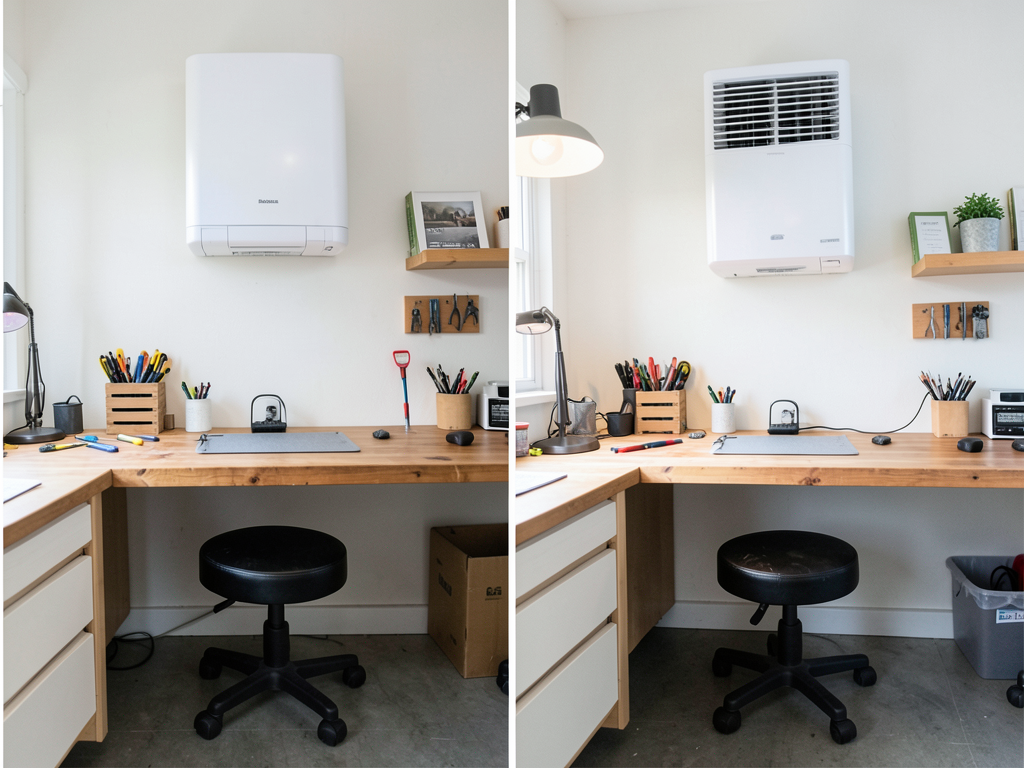
The indoor unit mounts on your garage wall or ceiling and distributes conditioned air directly into the space. Because there’s no ductwork these systems avoid the energy losses associated with central air systems. The inverter technology adjusts compressor speed based on demand rather than cycling on and off like traditional units.
For garage applications mini-splits offer several advantages. They operate at sound levels as low as 19 decibels quieter than a whisper. The lack of ducts means no dust accumulation and easier maintenance. Most importantly they provide both heating and cooling in a single unit making them ideal for year-round use in Douglasville’s variable climate. The Only HVAC Maintenance Plan Dunwoody Homeowners Actually Need.
Calculating the Right Size for Your Garage
Proper sizing ensures your mini-split operates efficiently and maintains comfortable temperatures. Unlike home installations garage mini-splits require different calculations due to the unique characteristics of these spaces.
Start with your garage’s square footage. A standard two-car garage measures about 400-500 square feet while a three-car garage might be 600-800 square feet. However square footage alone doesn’t determine the right size.
Consider these additional factors:
- Insulation levels in walls ceiling and garage door
- Window area and sun exposure
- Climate zone heat load
- Intended use of the space
- Height of ceilings
In Douglasville’s climate zone a well-insulated two-car garage typically needs 9000-12000 BTU for cooling. However uninsulated garages often require 30-50% more capacity. The high humidity means you need a unit with strong dehumidification capabilities not just cooling power.
Using a unit that’s too small means it runs constantly struggling to maintain temperature. An oversized unit cycles on and off frequently reducing efficiency and failing to properly dehumidify the air. Neither scenario provides the comfort you’re seeking.
Installation Considerations for Douglasville Homes
Installing a mini-split in your garage involves several key decisions that affect both performance and cost. The location of your outdoor unit impacts system efficiency and longevity.
Outdoor units need clear space for airflow ideally mounted on a concrete pad or wall bracket. In Douglasville’s climate consider overhead cover to protect from sun and rain though units are designed for outdoor use. The distance between indoor and outdoor units affects installation complexity and cost with longer linesets requiring more refrigerant and labor.
Electrical requirements vary by unit size. Most residential mini-splits need a dedicated 220-volt circuit. Older Douglasville homes especially those built before the 1980s may need electrical panel upgrades to accommodate this additional load. Your HVAC contractor should assess your panel capacity during the initial consultation.
Condensate drainage presents another consideration. Mini-splits produce water as they remove humidity from the air. In garages this moisture needs proper drainage either through gravity to an existing drain or with a condensate pump if gravity drainage isn’t feasible.
Cost Factors and Investment Considerations
Understanding the cost breakdown helps you budget appropriately for your garage conversion. Several factors influence the total investment required.
Unit costs vary by capacity and features. A basic 9000 BTU mini-split for a small garage might start around $800-1200 for just the equipment. Higher capacity units with advanced features like Wi-Fi control and enhanced filtration range from $1500-3000. Comparing Costs for a New AC Unit in Sandy Springs.
Installation labor typically costs $1000-2500 depending on complexity. Factors affecting installation costs include:
- Distance between indoor and outdoor units
- Need for electrical upgrades
- Mounting surface preparation
- Condensate drainage solutions
- Permit requirements and fees
Additional costs might include electrical work ($500-1500) insulation upgrades ($200-800) and any necessary repairs to mounting surfaces. Some homeowners choose to DIY the installation but professional installation ensures proper refrigerant charging and system performance. EPA refrigerant handling requirements.
While the upfront investment might seem significant consider the alternatives. Extending your home’s central HVAC to the garage often costs $3000-8000 and still may not adequately address the unique conditions of garage spaces. Window units at $300-600 each don’t provide year-round comfort and create security issues.
Benefits Beyond Temperature Control
A properly sized mini-split does more than just heat and cool your garage. Modern units offer features that enhance your workspace in ways you might not expect.
Advanced filtration systems remove dust pollen and other airborne particles. For Douglasville residents dealing with spring pollen this can make your garage workspace significantly more comfortable. Some units include activated carbon filters that reduce odors and volatile organic compounds.
Dehumidification mode operates independently of cooling. This feature is particularly valuable in Georgia’s humid climate allowing you to remove moisture from the air without overcooling the space. Maintaining humidity levels between 40-60% prevents mold growth and protects tools and equipment from rust.
Many mini-splits include smart controls accessible via smartphone apps. You can adjust temperature set schedules and monitor energy usage remotely. Some models integrate with home automation systems allowing voice control through devices like Amazon Alexa or Google Home.
The quiet operation means you can work concentrate or even sleep in your garage without the constant drone of a window unit. Sound levels as low as 19 decibels won’t interfere with phone calls video conferences or your favorite music while working.
Navigating Local Regulations in Douglasville
Before installing your mini-split understand the local requirements that might affect your project. Douglasville and the broader Paulding County area have specific regulations for HVAC installations.
Building permits are typically required for mini-split installations. The permit process ensures your installation meets local building codes and safety standards. Your HVAC contractor should handle permit acquisition though some homeowners prefer to manage this themselves.
Consider your homeowners association rules if applicable. Some HOAs in Douglasville’s newer developments have restrictions on outdoor unit placement or require specific screening for mechanical equipment. Check these regulations before finalizing your installation plans.
Electrical inspections may be required especially if your installation involves panel upgrades or new circuits. These inspections verify that all electrical work meets National Electrical Code standards and local amendments.
Environmental considerations matter in Georgia. Proper refrigerant handling is required by federal law with certification needed for technicians who install or service these systems. This protects both the environment and your warranty coverage.
Maximizing Energy Efficiency
While mini-splits are inherently more efficient than many alternatives you can take steps to maximize their performance and minimize operating costs in your garage conversion.
Improving insulation provides the biggest efficiency gains. Adding insulation to garage walls ceiling and especially the garage door can reduce your heating and cooling load by 30% or more. Reflective insulation on the garage door helps block radiant heat during summer months. Improving the Air Quality in Your Brookhaven Home During Pollen Season.
Seal air leaks around windows doors and where walls meet the ceiling. Weatherstripping on the main garage door prevents treated air from escaping. These simple improvements make your mini-split work less to maintain comfortable temperatures.
Consider a ceiling fan to help distribute conditioned air. While mini-splits do a good job of air circulation a ceiling fan can eliminate hot or cold spots and allow you to set the thermostat a few degrees higher in summer or lower in winter.
Programmable settings help manage energy use. Set higher temperatures when you’re not using the space and lower them an hour before you plan to work there. Many mini-splits remember your preferences and adjust automatically.
Regular maintenance keeps your system running efficiently. Clean or replace filters every few months more often if you’re doing dusty work in the space. Keep the outdoor unit clear of debris and ensure nothing blocks the indoor unit’s airflow.
Common Use Cases for Garage Conversions
Different uses for your garage space influence your mini-split selection and installation approach. Understanding your primary use helps optimize the system for your specific needs.
Home offices benefit from quiet operation and air filtration. The ability to maintain consistent temperatures supports productivity and protects electronics from humidity damage. Consider a unit with advanced filtration if you’re sensitive to dust or pollen.
Workshops for woodworking metalworking or crafts generate heat and dust. A mini-split with a strong filter and the ability to handle higher ambient temperatures works well here. The dehumidification feature protects tools and materials from moisture damage.
Fitness spaces like home gyms need good air circulation and temperature control for comfort during workouts. The quick response of mini-split technology means the space reaches your desired temperature rapidly so you can start your workout without delay.
Art studios and music rooms benefit from consistent temperatures that protect sensitive materials and instruments. The quiet operation won’t interfere with recording or concentration. Some artists appreciate the ability to maintain specific humidity levels for their work.
Guest suites or accessory dwelling units (ADUs) require year-round comfort for occupants. A mini-split provides independent temperature control separate from the main house allowing guests to set their preferred conditions.
Maintenance and Longevity
Understanding maintenance requirements helps you protect your investment and ensure reliable operation for years to come. Mini-splits typically last 15-20 years with proper care significantly longer than window units.
Filter cleaning is the most frequent maintenance task. Most filters need cleaning every two to three months. Some units have washable filters that you simply rinse and dry while others use replaceable filters. Clean filters maintain efficiency and air quality.
Outdoor unit maintenance includes keeping the area around the condenser clear of leaves grass and debris. Ensure nothing blocks the 2-3 feet of clearance needed around the unit for proper airflow. Check that the unit remains level as settling can affect performance.
Indoor unit maintenance involves checking that the drain line remains clear. Some units have a drain pan that can develop algae growth over time. Annual professional maintenance includes checking refrigerant levels testing electrical connections and cleaning coils.
Unusual noises odors or reduced performance indicate potential issues. Addressing these promptly prevents minor problems from becoming major repairs. Most quality mini-splits include self-diagnostic systems that display error codes for common issues.
Consider a maintenance agreement with your installation company. These typically include two annual visits that keep your system running efficiently and catch potential issues before they cause breakdowns.
Making the Right Choice for Your Space
Selecting the right mini-split involves balancing several factors to find the optimal solution for your specific garage and intended use.
Start by having a professional load calculation performed. This assessment considers your garage’s unique characteristics including construction materials insulation levels and sun exposure. The calculation ensures you get a unit sized correctly for your space.
Consider the mounting options for your indoor unit. Wall-mounted units are most common and cost-effective but may not suit all garage layouts. Ceiling cassette units distribute air in four directions making them ideal for larger spaces. Floor-standing units work well in garages with limited wall space.
Evaluate the features that matter most for your use. Basic models provide reliable heating and cooling while premium units offer Wi-Fi control advanced filtration and enhanced dehumidification. Match the features to your priorities and budget.
Check warranty terms carefully. Quality manufacturers typically offer 5-10 year warranties on compressors and parts. Some contractors provide additional labor warranties. Understanding what’s covered helps you assess the true value of different options.
Ask about the contractor’s experience with garage installations specifically. Garage applications present unique challenges that differ from standard home installations. Experienced contractors understand these nuances and can recommend solutions you might not have considered. Specialized HVAC Solutions for Historic Virginia-Highland Homes.
Getting Started with Your Garage Conversion
Ready to transform your garage into a comfortable year-round workspace? The process starts with a professional assessment of your space and needs.
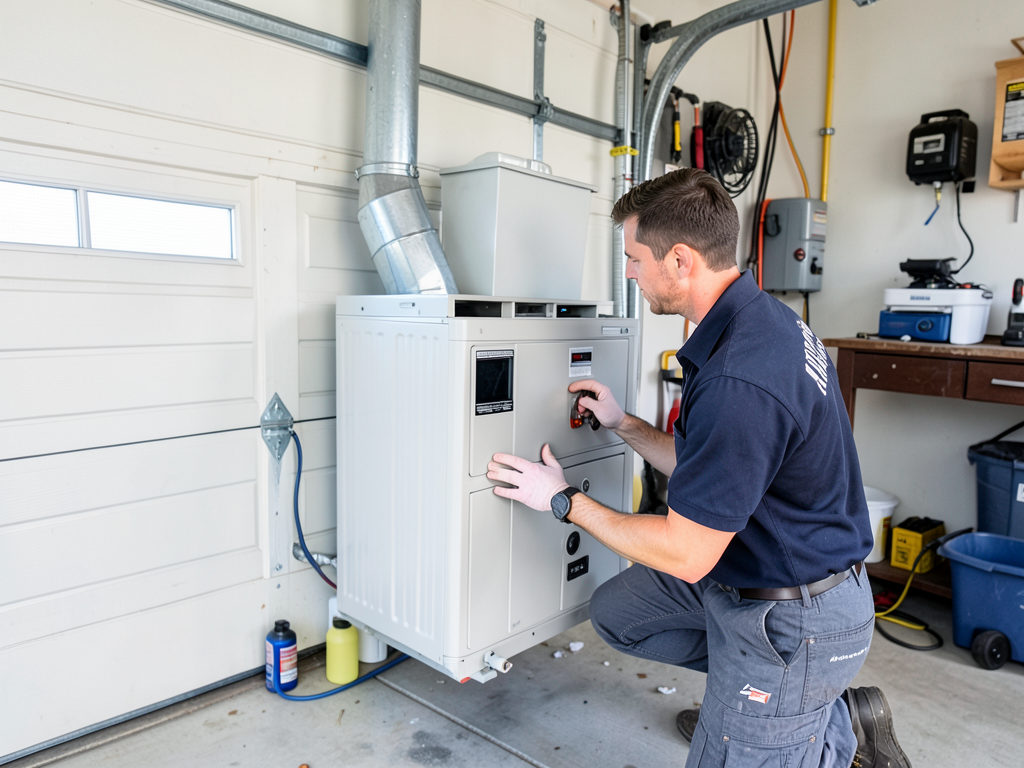
During the initial consultation your HVAC contractor should measure your garage evaluate existing insulation and discuss your intended use. They’ll perform a load calculation to determine the right unit size and provide recommendations for optimal placement of indoor and outdoor units.
Ask about the installation timeline. Most garage mini-split installations complete in one to two days depending on complexity. Electrical work if needed might require a separate visit from a licensed electrician.
Discuss the total investment including equipment installation and any necessary electrical work. Quality contractors provide detailed written estimates that break down all costs. Be wary of unusually low bids which might indicate corner-cutting or hidden costs.
Consider timing your installation. Spring and fall are typically less busy for HVAC contractors potentially offering better scheduling options and sometimes seasonal promotions. However if you need immediate relief from summer heat or winter cold schedule as soon as possible.
Finally ask about maintenance plans and warranty registration. Professional installation usually includes warranty registration with the manufacturer. Maintenance plans provide ongoing protection and ensure your system operates efficiently for years to come.
Frequently Asked Questions
How long does a mini-split installation take in a garage?
Most garage mini-split installations complete in one to two days. The indoor unit mounting takes a few hours while outdoor unit placement and line set installation require additional time. Electrical connections and system charging add another few hours. Complex installations involving electrical upgrades or difficult routing might extend to two days.
Can I install a mini-split myself to save money?
While DIY installation is possible it’s not recommended for most homeowners. Mini-splits require proper refrigerant charging electrical connections and system commissioning that typically need professional tools and expertise. DIY installation often voids manufacturer warranties and may not meet local building codes. Professional installation ensures optimal performance and protects your investment.
Will a mini-split increase my energy bills significantly?
Properly sized mini-splits are highly efficient and often reduce energy costs compared to window units or extending central HVAC. Their inverter technology adjusts to maintain temperature without the energy spikes of cycling on and off. Adding insulation to your garage further reduces operating costs. Many homeowners report energy bills increasing by less than $20-30 per month while gaining year-round comfort.
Do I need a permit to install a mini-split in my garage?
Yes permits are typically required for mini-split installations in Douglasville. The permit process ensures your installation meets local building codes and safety standards. Your HVAC contractor should handle permit acquisition though some homeowners prefer to manage this themselves. Permit fees vary but usually range from $75-200 depending on the scope of work.
How do I maintain my garage mini-split system?
Regular maintenance includes cleaning or replacing filters every two to three months checking that outdoor units remain clear of debris and ensuring drain lines flow freely. Annual professional maintenance checks refrigerant levels tests electrical connections and cleans coils. These simple steps keep your system running efficiently and extend its lifespan significantly.
Transform Your Garage Today
Your garage has untapped potential waiting to become a comfortable productive space you can use throughout the year. A properly sized and installed mini-split system provides the heating and cooling foundation for this transformation while offering benefits like air filtration humidity control and whisper-quiet operation.
The investment in a garage mini-split pays dividends in expanded usable space increased home value and year-round comfort. Whether you’re creating a home office workshop gym or guest suite this technology makes your vision possible regardless of outside temperatures.
Don’t let another summer pass with an unusable garage space. Contact a qualified HVAC contractor today to assess your garage and provide recommendations for your specific needs. With professional installation and proper maintenance your mini-split will provide reliable comfort for 15-20 years giving you a versatile space that enhances your home and lifestyle.
Ready to get started? Call Summit HVAC Atlanta at (770) 600-9611 for a free consultation and estimate on transforming your Douglasville garage into the comfortable workspace you’ve been imagining. For more information, visit Energy.gov mini-split guide. For more information, visit NACHI mini-split installation guide.
{
“@context”: “https://schema.org”,
“@type”: “BlogPosting”,
“headline”: “Turning Your Douglasville Garage into a Year-Round Workspace with a Mini-Split”,
“description”: “Transform your Douglasville garage with a mini-split system. Learn about installation, costs, and local climate considerations for year-round comfort.”,
“wordCount”: 2968,
“datePublished”: “2026-04-12T09:47:00.000Z”,
“dateModified”: “2026-04-12T09:47:00.000Z”,
“inLanguage”: “en-US”,
“mainEntityOfPage”: {
“@type”: “WebPage”,
“@id”: “https://summithvacatlanta.com”
},
“publisher”: {
“@type”: “LocalBusiness”,
“name”: “Summit HVAC Atlanta”,
“url”: “https://summithvacatlanta.com”
},
“author”: {
“@type”: “Organization”,
“name”: “Summit HVAC Atlanta”,
“url”: “https://summithvacatlanta.com”
},
“image”: {
“@type”: “ImageObject”,
“url”: “https://summithvacatlanta.com/wp-content/uploads/2026/03/turning-your-douglasville-garage-into-a-year-round-1.png”
}
}
{
“@context”: “https://schema.org”,
“@type”: “HVACBusiness”,
“name”: “Summit HVAC Atlanta”,
“url”: “https://summithvacatlanta.com”,
“address”: {
“@type”: “PostalAddress”,
“addressLocality”: “Atlanta”
},
“areaServed”: {
“@type”: “City”,
“name”: “Atlanta”
}
}
{
“@context”: “https://schema.org”,
“@type”: “FAQPage”,
“mainEntity”: [
{
“@type”: “Question”,
“name”: “How long does a mini-split installation take in a garage?”,
“acceptedAnswer”: {
“@type”: “Answer”,
“text”: “Most garage mini-split installations complete in one to two days. The indoor unit mounting takes a few hours while outdoor unit placement and line set installation require additional time. Electrical connections and system charging add another few hours. Complex installations involving electrical upgrades or difficult routing might extend to two days.”
}
},
{
“@type”: “Question”,
“name”: “Can I install a mini-split myself to save money?”,
“acceptedAnswer”: {
“@type”: “Answer”,
“text”: “While DIY installation is possible it’s not recommended for most homeowners. Mini-splits require proper refrigerant charging electrical connections and system commissioning that typically need professional tools and expertise. DIY installation often voids manufacturer warranties and may not meet local building codes. Professional installation ensures optimal performance and protects your investment.”
}
},
{
“@type”: “Question”,
“name”: “Will a mini-split increase my energy bills significantly?”,
“acceptedAnswer”: {
“@type”: “Answer”,
“text”: “Properly sized mini-splits are highly efficient and often reduce energy costs compared to window units or extending central HVAC. Their inverter technology adjusts to maintain temperature without the energy spikes of cycling on and off. Adding insulation to your garage further reduces operating costs. Many homeowners report energy bills increasing by less than $20-30 per month while gaining year-round comfort.”
}
},
{
“@type”: “Question”,
“name”: “Do I need a permit to install a mini-split in my garage?”,
“acceptedAnswer”: {
“@type”: “Answer”,
“text”: “Yes permits are typically required for mini-split installations in Douglasville. The permit process ensures your installation meets local building codes and safety standards. Your HVAC contractor should handle permit acquisition though some homeowners prefer to manage this themselves. Permit fees vary but usually range from $75-200 depending on the scope of work.”
}
},
{
“@type”: “Question”,
“name”: “How do I maintain my garage mini-split system?”,
“acceptedAnswer”: {
“@type”: “Answer”,
“text”: “Regular maintenance includes cleaning or replacing filters every two to three months checking that outdoor units remain clear of debris and ensuring drain lines flow freely. Annual professional maintenance checks refrigerant levels tests electrical connections and cleans coils. These simple steps keep your system running efficiently and extend its lifespan significantly.”
}
}
]
}
{
“@context”: “https://schema.org”,
“@type”: “BreadcrumbList”,
“itemListElement”: [
{
“@type”: “ListItem”,
“position”: 1,
“name”: “Home”,
“item”: “https://summithvacatlanta.com”
},
{
“@type”: “ListItem”,
“position”: 2,
“name”: “Blog”,
“item”: “https://summithvacatlanta.com/blog”
},
{
“@type”: “ListItem”,
“position”: 3,
“name”: “Turning Your Douglasville Garage into a Year-Round Workspace with a Mini-Split”
}
]
}
{
“@context”: “https://schema.org”,
“@type”: “Service”,
“serviceType”: “HVAC”,
“provider”: {
“@type”: “LocalBusiness”,
“name”: “Summit HVAC Atlanta”,
“url”: “https://summithvacatlanta.com”
},
“areaServed”: {
“@type”: “City”,
“name”: “Atlanta”
},
“description”: “Transform your Douglasville garage with a mini-split system. Learn about installation, costs, and local climate considerations for year-round comfort.”
}