
The Best Heating and Cooling Options for Your Year-Round Sunroom in Lake Claire
A sunroom in Lake Claire can feel like paradise during spring and fall. But when Georgia summer heat hits or winter temperatures drop, that glass-enclosed space often becomes unbearable. The challenge comes from the sunroom’s design. Large windows and glass walls create beautiful views but also trap heat in summer and lose warmth in winter. Georgia Power rebates.
The Atlanta climate makes this problem worse. Our summers bring high humidity and temperatures that regularly climb above 90 degrees. Winter nights occasionally dip below freezing. A sunroom without proper climate control becomes either a sauna or an icebox depending on the season.. Read more about How better humidity control in Chosewood Park can actually help you sleep.
This guide breaks down the four best ways to heat and cool your sunroom for year-round comfort. We will look at the pros and cons of each system and help you understand which option fits your Lake Claire home best.
Why Sunrooms Present a Unique HVAC Challenge
Sunrooms create special heating and cooling problems that regular rooms do not face. The large glass areas mean your sunroom loses or gains heat much faster than the rest of your house. This happens because glass has a low R-value compared to insulated walls.
Atlanta’s humid subtropical climate adds another layer of complexity. Our high humidity makes hot temperatures feel even hotter. A sunroom that reaches 85 degrees with 70% humidity feels much more uncomfortable than the same temperature with lower humidity.
The orientation of your sunroom matters too. South-facing rooms get intense afternoon sun during Atlanta summers. East-facing rooms heat up quickly in morning sun. West-facing rooms trap heat from the setting sun. North-facing rooms stay cooler but can feel cold in winter.
Building codes in Atlanta also affect your options. Any new HVAC installation must meet Georgia State Minimum Standard Mechanical Code requirements. This means proper permits and inspections for most heating and cooling additions. Georgia Power rebates.
Top 4 Solutions for Sunroom Climate Control
1. Ductless Mini-Split Systems
Ductless mini-split systems work by placing an outdoor compressor unit connected to one or more indoor air handlers. The indoor units mount on walls or ceilings and blow conditioned air directly into the room.
These systems excel at sunroom heating and cooling for several reasons. First, they provide both heating and cooling from a single unit. Second, they operate independently from your home’s main HVAC system. Third, they offer precise temperature control through remote controls or smartphone apps.
Installation is relatively simple compared to extending ductwork. A small hole through the wall connects the indoor and outdoor units. This means less construction mess and faster completion time.
Modern mini-splits include advanced features like inverter technology that adjusts power use based on cooling needs. This saves energy compared to systems that only run at full power. Many units also include dehumidification modes perfect for Atlanta’s humid summers.
The main drawback is upfront cost. Quality mini-split systems typically cost more than portable units but less than extending existing ductwork. However, their energy efficiency often leads to lower monthly utility bills. Improving the Air Quality in Your Brookhaven Home During Pollen Season.
2. Extending Your Existing HVAC Ductwork
Extending your current ductwork means adding vents and returns to bring your sunroom into your home’s central HVAC system. This approach works well if your existing system has enough capacity to handle the additional load.
The biggest advantage is seamless integration. Your sunroom maintains the same temperature as the rest of your house. You control everything from your main thermostat. There are no separate units to maintain or control.
However, extending ductwork presents several challenges. First, your existing HVAC system must have enough capacity. A Manual J load calculation determines if your system can handle the extra square footage. Many older Atlanta homes have systems sized exactly for the original space.
Second, the installation can be invasive. Running new ducts through walls or ceilings often requires cutting into existing structures. This increases both cost and project timeline.
Third, sunrooms often need different temperature settings than the main house. You might want your sunroom cooler than the rest of the house in summer. Standard ductwork does not allow for this flexibility.
Finally, the cost can be substantial. Extending ductwork typically costs more than mini-splits when you factor in labor and materials. The exact price depends on your home’s layout and the distance from existing ducts. Comparing Costs for a New AC Unit in Sandy Springs.
3. Packaged Terminal Air Conditioners (PTAC)
PTAC units are self-contained heating and cooling systems commonly found in hotels and apartments. They mount through exterior walls and provide both heating and cooling from a single unit.
These units work well for sunrooms because they do not require ductwork. Installation involves cutting a hole in the exterior wall and mounting the unit. This makes them less invasive than ductwork extensions.
PTAC units offer good temperature control and can heat or cool a sunroom effectively. Many models include heat pump technology for efficient heating in mild weather and electric resistance heat for colder temperatures.
The main advantages include lower upfront cost compared to mini-splits and ductwork, relatively simple installation, and the ability to heat and cool independently of your main system.
Disadvantages include higher operating costs than more efficient systems, potential noise during operation, and the need for exterior wall space. PTAC units also protrude into the room, taking up floor space.
Modern PTAC units have improved significantly in efficiency and noise levels. However, they still generally cost more to operate than mini-splits or properly extended ductwork.
4. Portable and Window Units
Portable air conditioners and window units represent the most budget-friendly option for sunroom climate control. These units require no permanent installation and can be moved or removed as needed.
Portable units sit on the floor and vent hot air through a window kit or wall opening. Window units mount in existing windows and cool the room while blocking part of the view.
The biggest advantage is cost. You can purchase a portable or window unit for a few hundred dollars and have immediate cooling. There is no installation cost and no need for professional help.
However, these units have significant limitations. They typically cool only 300-500 square feet effectively. Most lack heating capability, though some portable heat pumps exist. They also create noise and take up valuable floor or window space.
Energy efficiency is another concern. Portable and window units generally cost more to operate than permanent systems. They also may not handle Atlanta’s high humidity as effectively as dedicated dehumidification systems.
For occasional use or very small sunrooms, these units can work. But for year-round comfort in a Lake Claire sunroom, they often prove inadequate during peak summer heat.
Energy Efficiency and the Atlanta Climate: Managing Georgia Humidity
Atlanta’s humidity makes efficient cooling more complex than in drier climates. When humidity is high, your air conditioner must work harder to remove moisture from the air before it can effectively cool the space.
This is why many sunroom HVAC solutions include dehumidification features. Mini-splits often have dedicated dry modes that run the fan slower to remove more moisture. Some systems include separate dehumidifiers that work alongside cooling units. Specialized HVAC Solutions for Historic Virginia-Highland Homes.
Energy efficiency ratings matter in Georgia’s long cooling season. Look for systems with high SEER2 ratings. SEER2 measures cooling efficiency under typical conditions. Higher numbers mean lower energy bills. For Atlanta, aim for at least 16 SEER2, though 18-20+ offers better efficiency.
Heat pump technology provides efficient heating during Atlanta’s mild winters. Modern heat pumps work effectively down to about 25-30 degrees. For occasional colder temperatures, many systems include electric resistance backup heat.
Proper insulation complements your HVAC choice. Even the best cooling system struggles if your sunroom loses cooled air through poorly insulated glass. Consider upgrading to Low-E glass or adding window films that block UV rays and reduce heat gain.
Smart thermostats help optimize energy use. Many modern systems connect to Wi-Fi and allow you to control temperatures remotely. Some learn your patterns and adjust automatically to save energy when you are away.
Cost Comparison: Installation vs. Long-Term Operation
Understanding both upfront and ongoing costs helps you make the best choice for your budget. Here is how the main options compare:
| System Type | Initial Cost Range | Monthly Operating Cost | Installation Complexity |
|---|---|---|---|
| Ductless Mini-Split | $3,500 – $7,000 | $50 – $100 | Moderate |
| Extended Ductwork | $4,000 – $10,000 | $40 – $80 | High |
| PTAC Unit | $1,500 – $3,500 | $60 – $120 | Low |
| Portable/Window | $200 – $600 | $70 – $150 | None |
These ranges reflect typical Atlanta market pricing as of 2026. Your actual costs will vary based on sunroom size, existing infrastructure, and specific equipment choices.
Energy efficiency impacts long-term costs significantly. A system that costs $1,000 more upfront but saves $20 monthly on utilities pays for itself in about four years. After that, you save money every month.
Consider also maintenance costs. Mini-splits and ductwork systems need annual professional maintenance. Portable units require minimal maintenance but typically need replacement every 5-7 years. The Only HVAC Maintenance Plan Dunwoody Homeowners Actually Need.
Key Factors to Consider Before Choosing a System
Several factors should guide your decision beyond just cost. Your specific situation in Lake Claire will determine which option works best.
Sunroom size affects system capacity needs. Larger rooms require more powerful units measured in BTUs. A typical 200-square-foot sunroom needs about 6,000-8,000 BTUs for cooling. Larger spaces may need 12,000 BTUs or more.
Your home’s existing HVAC capacity matters if you consider extending ductwork. A professional load calculation determines if your system has spare capacity. Many Atlanta homes built before 2000 have systems sized exactly for original square footage.
Noise tolerance varies by person and use. If you use your sunroom for quiet reading or sleeping, quieter systems like mini-splits may be worth the extra cost. PTAC units and portable systems tend to be noisier.
Aesthetic preferences influence your choice. Mini-splits have indoor units that mount on walls or ceilings. PTAC units protrude into the room. Ductwork extensions are invisible but may require visible vents. Consider what you are willing to see in your sunroom.
Future plans affect your decision. If you plan to enclose or expand your sunroom later, choose a system that can grow with your needs. Mini-splits offer good flexibility for future changes.
Local incentives can reduce costs. Georgia Power sometimes offers rebates for high-efficiency HVAC installations. Check current programs before making your final decision.
Why Professional Installation Matters for Sunroom Comfort
Professional installation ensures your system works as designed. Poor installation causes many HVAC problems, from reduced efficiency to complete system failure.
Load calculations require expertise. Determining the right system size involves measuring your sunroom, evaluating insulation, and considering factors like window orientation and local climate. Guessing leads to systems that are too small or wastefully large.
Refrigerant handling requires certification. Federal law mandates proper training and licensing for anyone working with HVAC refrigerants. DIY installation or using unlicensed contractors can result in fines and system damage.
Wiring and electrical work must meet code. HVAC systems require proper electrical connections for safe operation. Incorrect wiring creates fire hazards and can void equipment warranties.
Permits and inspections protect you. Most HVAC installations in Atlanta require permits from the city or county. Professional contractors handle this process, ensuring your installation meets all local requirements.
Warranty protection depends on professional installation. Most manufacturers void warranties if uncertified people install their equipment. This leaves you responsible for all future repair costs.
Professional contractors also provide valuable advice specific to your situation. They can recommend brands that perform well in Atlanta’s climate and suggest features that address your particular needs.
Sunroom HVAC Frequently Asked Questions
How do I know what size HVAC system my sunroom needs?
System size depends on sunroom square footage, insulation quality, window area, and local climate. A professional load calculation measures all these factors to determine the exact BTU requirement. Guessing often results in systems that are too small or inefficiently large.
Can I install a sunroom HVAC system myself to save money?
DIY installation is not recommended for most sunroom HVAC systems. These units involve electrical work, refrigerant handling, and complex installation procedures. Improper installation can create safety hazards, void warranties, and lead to expensive repairs. Professional installation ensures safe, efficient operation.
Will extending my home’s ductwork cool my sunroom effectively?
Extending ductwork can work well if your existing system has enough capacity and the sunroom is not too far from current ducts. However, many Atlanta homes have systems sized exactly for their original square footage. A professional load calculation determines if your system can handle the additional space.
How long does sunroom HVAC installation typically take?
Installation time varies by system type. Mini-splits typically install in one to two days. Ductwork extensions may take three to five days depending on complexity. PTAC units often install in one day. Portable units require no installation time.
What maintenance do sunroom HVAC systems require?
All HVAC systems need annual professional maintenance including cleaning coils, checking refrigerant levels, and testing electrical components. Mini-splits and PTAC units also need regular filter cleaning or replacement. Ductless systems require clearing the condensate line to prevent water damage.
Are there energy rebates available for sunroom HVAC upgrades in Atlanta?
Georgia Power and other utilities sometimes offer rebates for high-efficiency HVAC installations. The availability and amount vary by year and specific equipment. Ask your HVAC contractor about current rebate programs when getting quotes.
Will a sunroom HVAC system increase my home’s value?
A properly installed, efficient HVAC system for your sunroom can increase home value by making the space usable year-round. However, the return on investment varies. Focus on choosing a system that meets your comfort needs rather than purely for resale value.
How noisy are different sunroom HVAC options?
Noise levels vary significantly. Modern mini-splits operate very quietly, often under 30 decibels. Ductless systems with outdoor compressors can be slightly louder. PTAC units typically produce 40-50 decibels of noise. Portable units are often the loudest at 50-60 decibels.
Can sunroom HVAC systems provide both heating and cooling?
Most modern sunroom HVAC solutions offer both heating and cooling. Mini-splits and PTAC units with heat pump technology provide efficient heating and cooling. Some portable units also offer both functions. Traditional window air conditioners typically only cool.
What is the lifespan of a typical sunroom HVAC system?
Lifespan varies by system type and maintenance. Mini-splits typically last 12-15 years with proper maintenance. Ductless systems with outdoor units last 15-20 years. PTAC units generally last 10-15 years. Portable units often need replacement every 5-7 years due to wear and efficiency loss.
Making Your Final Decision
Choosing the right HVAC solution for your Lake Claire sunroom requires balancing several factors. Consider your budget, comfort needs, and long-term plans. Think about how you use the space and what temperature ranges you need.
Start by getting professional assessments from qualified HVAC contractors. They can measure your sunroom, evaluate your home’s existing system, and provide specific recommendations. Compare multiple quotes to understand your options.
Remember that the cheapest option is not always the best value. A system that costs more upfront but operates efficiently can save money over time. Factor in both installation and operating costs when making your decision.
Also consider the environmental impact. More efficient systems use less electricity, reducing your carbon footprint. Many modern systems use environmentally friendly refrigerants that do not harm the ozone layer.
Finally, think about your comfort and peace of mind. A properly sized, professionally installed system provides reliable comfort for years to come. This allows you to enjoy your sunroom throughout all four seasons without worrying about temperature extremes.
Your sunroom represents an investment in your home and lifestyle. Choosing the right HVAC solution ensures you can enjoy that investment year-round, no matter what Georgia weather brings.
Ready to Enjoy Year-Round Sunroom Comfort?
Your sunroom should be a comfortable retreat throughout the year, not just during mild weather. The right HVAC solution can transform that glass-enclosed space into a true four-season room.
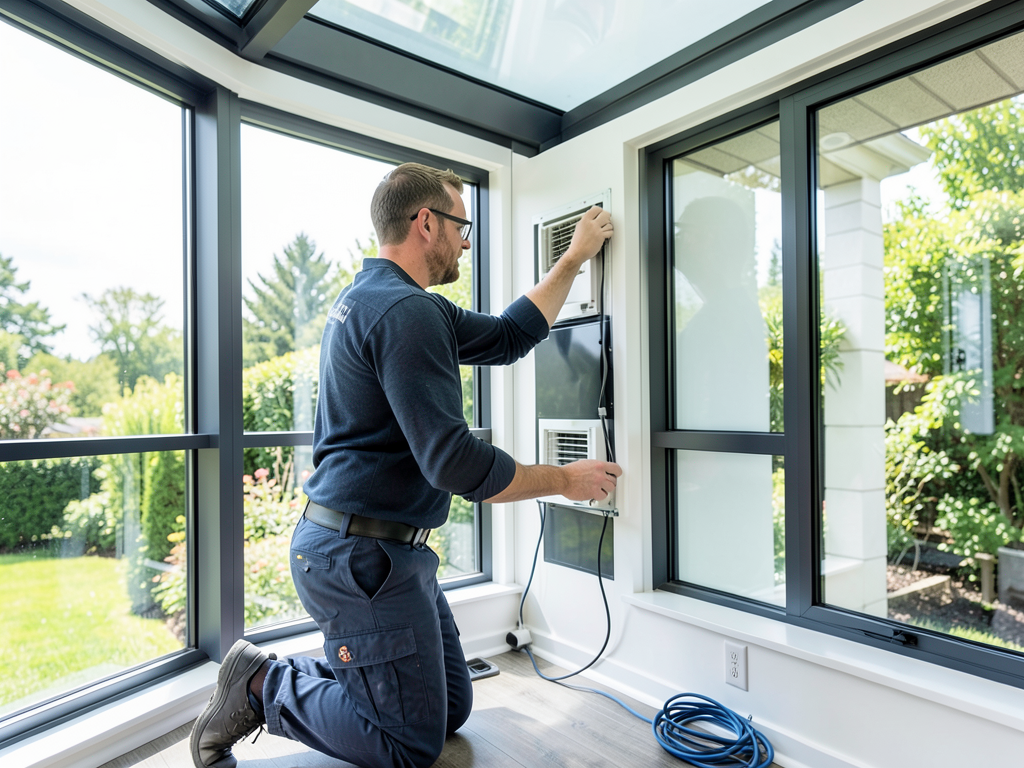
At Summit HVAC Atlanta, we understand the unique challenges Lake Claire homeowners face with sunroom climate control. Our NATE-certified technicians have helped countless Atlanta residents create comfortable sunroom environments that work with our specific climate conditions.
We offer free consultations to evaluate your sunroom and recommend the best heating and cooling options for your needs and budget. Our team handles everything from load calculations to professional installation, ensuring your system works perfectly from day one.
Do not let another Georgia summer or winter make your sunroom uncomfortable. Call Summit HVAC Atlanta today at (770) 600-9611 to schedule your free sunroom HVAC assessment. We will help you choose the perfect system to enjoy your sunroom every day of the year.
Summit HVAC Atlanta – Your Trusted Experts for Year-Round Home Comfort in the Atlanta Metro Area.
You may also find this helpful. Keeping Your Peachtree City Golf Cart Garage Cool and Dry.
{
“@context”: “https://schema.org”,
“@type”: “BlogPosting”,
“headline”: “The Best Heating and Cooling Options for Your Year-Round Sunroom in Lake Claire”,
“description”: “Discover the best HVAC solutions for your Lake Claire sunroom. Compare ductless mini-splits, extended ductwork, PTAC units, and portable options for year-round comfort.”,
“wordCount”: 2813,
“datePublished”: “2026-05-19T08:18:00.000Z”,
“dateModified”: “2026-05-19T08:18:00.000Z”,
“inLanguage”: “en-US”,
“mainEntityOfPage”: {
“@type”: “WebPage”,
“@id”: “https://summithvacatlanta.com”
},
“publisher”: {
“@type”: “LocalBusiness”,
“name”: “Summit HVAC Atlanta”,
“url”: “https://summithvacatlanta.com”
},
“author”: {
“@type”: “Organization”,
“name”: “Summit HVAC Atlanta”,
“url”: “https://summithvacatlanta.com”
},
“image”: {
“@type”: “ImageObject”,
“url”: “https://summithvacatlanta.com/wp-content/uploads/2026/03/the-best-heating-and-cooling-options-for-your-year-1.png”
}
}
{
“@context”: “https://schema.org”,
“@type”: “HVACBusiness”,
“name”: “Summit HVAC Atlanta”,
“url”: “https://summithvacatlanta.com”,
“address”: {
“@type”: “PostalAddress”,
“addressLocality”: “Atlanta”
},
“areaServed”: {
“@type”: “City”,
“name”: “Atlanta”
}
}
{
“@context”: “https://schema.org”,
“@type”: “FAQPage”,
“mainEntity”: [
{
“@type”: “Question”,
“name”: “How do I know what size HVAC system my sunroom needs?”,
“acceptedAnswer”: {
“@type”: “Answer”,
“text”: “System size depends on sunroom square footage, insulation quality, window area, and local climate. A professional load calculation measures all these factors to determine the exact BTU requirement. Guessing often results in systems that are too small or inefficiently large.”
}
},
{
“@type”: “Question”,
“name”: “Can I install a sunroom HVAC system myself to save money?”,
“acceptedAnswer”: {
“@type”: “Answer”,
“text”: “DIY installation is not recommended for most sunroom HVAC systems. These units involve electrical work, refrigerant handling, and complex installation procedures. Improper installation can create safety hazards, void warranties, and lead to expensive repairs. Professional installation ensures safe, efficient operation.”
}
},
{
“@type”: “Question”,
“name”: “Will extending my home’s ductwork cool my sunroom effectively?”,
“acceptedAnswer”: {
“@type”: “Answer”,
“text”: “Extending ductwork can work well if your existing system has enough capacity and the sunroom is not too far from current ducts. However, many Atlanta homes have systems sized exactly for their original square footage. A professional load calculation determines if your system can handle the additional space.”
}
},
{
“@type”: “Question”,
“name”: “How long does sunroom HVAC installation typically take?”,
“acceptedAnswer”: {
“@type”: “Answer”,
“text”: “Installation time varies by system type. Mini-splits typically install in one to two days. Ductwork extensions may take three to five days depending on complexity. PTAC units often install in one day. Portable units require no installation time.”
}
},
{
“@type”: “Question”,
“name”: “What maintenance do sunroom HVAC systems require?”,
“acceptedAnswer”: {
“@type”: “Answer”,
“text”: “All HVAC systems need annual professional maintenance including cleaning coils, checking refrigerant levels, and testing electrical components. Mini-splits and PTAC units also need regular filter cleaning or replacement. Ductless systems require clearing the condensate line to prevent water damage.”
}
},
{
“@type”: “Question”,
“name”: “Are there energy rebates available for sunroom HVAC upgrades in Atlanta?”,
“acceptedAnswer”: {
“@type”: “Answer”,
“text”: “Georgia Power and other utilities sometimes offer rebates for high-efficiency HVAC installations. The availability and amount vary by year and specific equipment. Ask your HVAC contractor about current rebate programs when getting quotes.”
}
},
{
“@type”: “Question”,
“name”: “Will a sunroom HVAC system increase my home’s value?”,
“acceptedAnswer”: {
“@type”: “Answer”,
“text”: “A properly installed, efficient HVAC system for your sunroom can increase home value by making the space usable year-round. However, the return on investment varies. Focus on choosing a system that meets your comfort needs rather than purely for resale value.”
}
},
{
“@type”: “Question”,
“name”: “How noisy are different sunroom HVAC options?”,
“acceptedAnswer”: {
“@type”: “Answer”,
“text”: “Noise levels vary significantly. Modern mini-splits operate very quietly, often under 30 decibels. Ductless systems with outdoor compressors can be slightly louder. PTAC units typically produce 40-50 decibels of noise. Portable units are often the loudest at 50-60 decibels.”
}
},
{
“@type”: “Question”,
“name”: “Can sunroom HVAC systems provide both heating and cooling?”,
“acceptedAnswer”: {
“@type”: “Answer”,
“text”: “Most modern sunroom HVAC solutions offer both heating and cooling. Mini-splits and PTAC units with heat pump technology provide efficient heating and cooling. Some portable units also offer both functions. Traditional window air conditioners typically only cool.”
}
},
{
“@type”: “Question”,
“name”: “What is the lifespan of a typical sunroom HVAC system?”,
“acceptedAnswer”: {
“@type”: “Answer”,
“text”: “Lifespan varies by system type and maintenance. Mini-splits typically last 12-15 years with proper maintenance. Ductless systems with outdoor units last 15-20 years. PTAC units generally last 10-15 years. Portable units often need replacement every 5-7 years due to wear and efficiency loss.”
}
},
{
“@type”: “Question”,
“name”: “Ready to Enjoy Year-Round Sunroom Comfort?”,
“acceptedAnswer”: {
“@type”: “Answer”,
“text”: “Your sunroom should be a comfortable retreat throughout the year, not just during mild weather. The right HVAC solution can transform that glass-enclosed space into a true four-season room.”
}
}
]
}
{
“@context”: “https://schema.org”,
“@type”: “BreadcrumbList”,
“itemListElement”: [
{
“@type”: “ListItem”,
“position”: 1,
“name”: “Home”,
“item”: “https://summithvacatlanta.com”
},
{
“@type”: “ListItem”,
“position”: 2,
“name”: “Blog”,
“item”: “https://summithvacatlanta.com/blog”
},
{
“@type”: “ListItem”,
“position”: 3,
“name”: “The Best Heating and Cooling Options for Your Year-Round Sunroom in Lake Claire”
}
]
}
{
“@context”: “https://schema.org”,
“@type”: “Service”,
“serviceType”: “HVAC”,
“provider”: {
“@type”: “LocalBusiness”,
“name”: “Summit HVAC Atlanta”,
“url”: “https://summithvacatlanta.com”
},
“areaServed”: {
“@type”: “City”,
“name”: “Atlanta”
},
“description”: “Discover the best HVAC solutions for your Lake Claire sunroom. Compare ductless mini-splits, extended ductwork, PTAC units, and portable options for year-round comfort.”
}