
Solving Cooking Smells and Poor Ventilation in Your Midtown High Rise Condo
Living in a Midtown Atlanta high-rise condo offers incredible views and urban convenience but often comes with a frustrating problem. Cooking smells that linger for days and poor air circulation make your kitchen feel stuffy. Unlike single-family homes high-rise buildings have unique ventilation challenges that require specialized solutions. Atlanta Building Permit Requirements.
The airtight construction designed for energy efficiency in modern Atlanta condos actually traps odors and moisture inside. When you sear a steak or fry fish those smells do not dissipate quickly. They linger in your unit and can even migrate through shared ductwork to neighboring apartments. Understanding why this happens is the first step to solving it.
Why Condo Ventilation is Different The Physics of High-Rises
High-rise buildings operate on different airflow principles than houses. In your Midtown condo you are dealing with shared exhaust systems the stack effect and building-wide pressure imbalances that single-family homes never encounter.
Shared versus Dedicated Ducting plays a major role. Many Atlanta high-rises built in the 2000s and 2010s use common exhaust risers that serve multiple units. When your neighbor grills burgers some of that air might be pulled through your kitchen vent. This shared system means you are not just fighting your own cooking odors but potentially your neighbors’ as well.. Read more about Why Your Chamblee Kitchen Range Hood Might Be Making Your AC Work Harder.
The Stack Effect in Atlanta High-Rises becomes particularly problematic during seasonal temperature changes. In winter warm air rises through the building creating negative pressure in lower units. In summer the opposite occurs. This constant air movement can reverse the intended flow of your kitchen exhaust pulling odors back into your living space instead of pushing them out.
Negative Pressure Issues are especially common in modern airtight condos. When your range hood exhausts air at 400 CFM it needs replacement air to come from somewhere. If your building’s makeup air system is not properly balanced your hood might be pulling air through bathroom vents electrical outlets or even from adjacent units through tiny gaps in construction.
Common Symptoms of Poor Kitchen Ventilation
Before diving into solutions it is important to identify whether you have a ventilation problem or just an underpowered range hood. Here are the telltale signs that your Midtown condo needs ventilation help. Specialized HVAC Solutions for Historic Virginia-Highland Homes.
Lingering Cooking Odors from Neighbors are a major red flag. If you can smell what your upstairs or downstairs neighbors are cooking your ventilation system is not creating proper separation between units. This often indicates issues with the common exhaust stack or inadequate sealing between floors.
Excessive Humidity and Window Condensation point to poor air exchange. Atlanta’s humid climate already challenges indoor air quality but if your kitchen windows fog up during cooking or you notice moisture on walls near the stove your ventilation is not removing enough moisture-laden air. Improving the Air Quality in Your Brookhaven Home During Pollen Season.
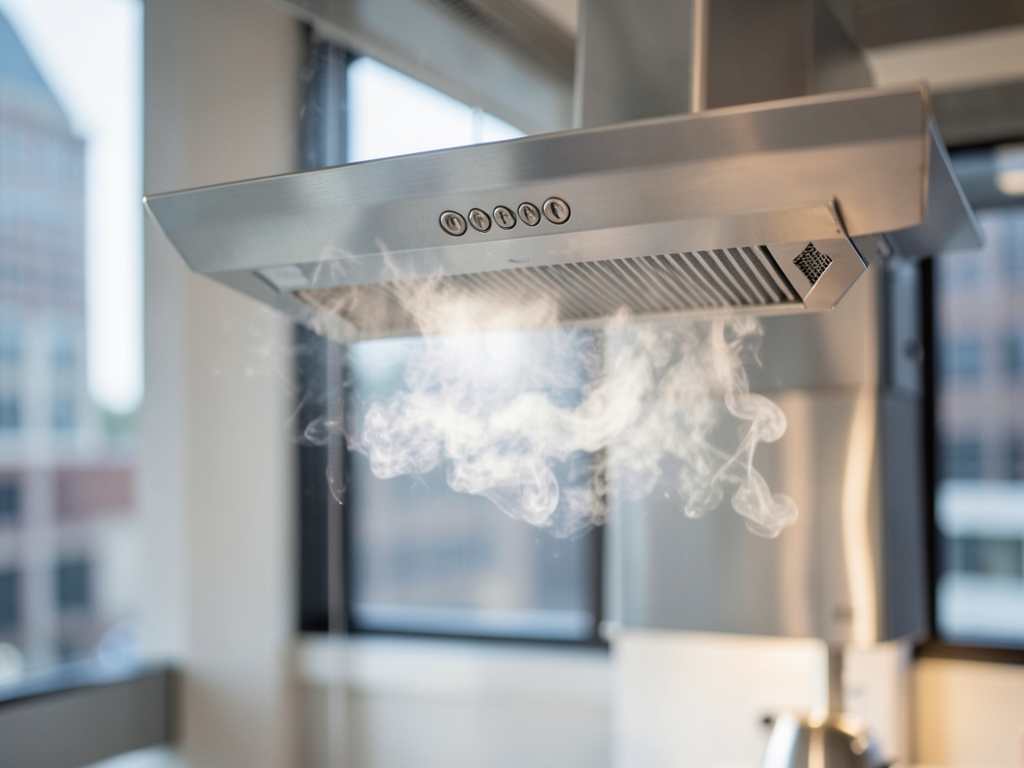
Poor Airflow at the Range Hood is perhaps the most obvious symptom. Hold a tissue near your vent while the fan runs. If it barely moves or gets sucked back toward you instead of being pulled into the hood your system has serious airflow problems.
Top 5 Condo Ventilation Problems and Their Fixes
Understanding the specific issues affecting your kitchen ventilation helps target the right solution. Here are the five most common problems we see in Atlanta high-rise condos and how to fix them.
1. Recirculating versus Vented Hoods
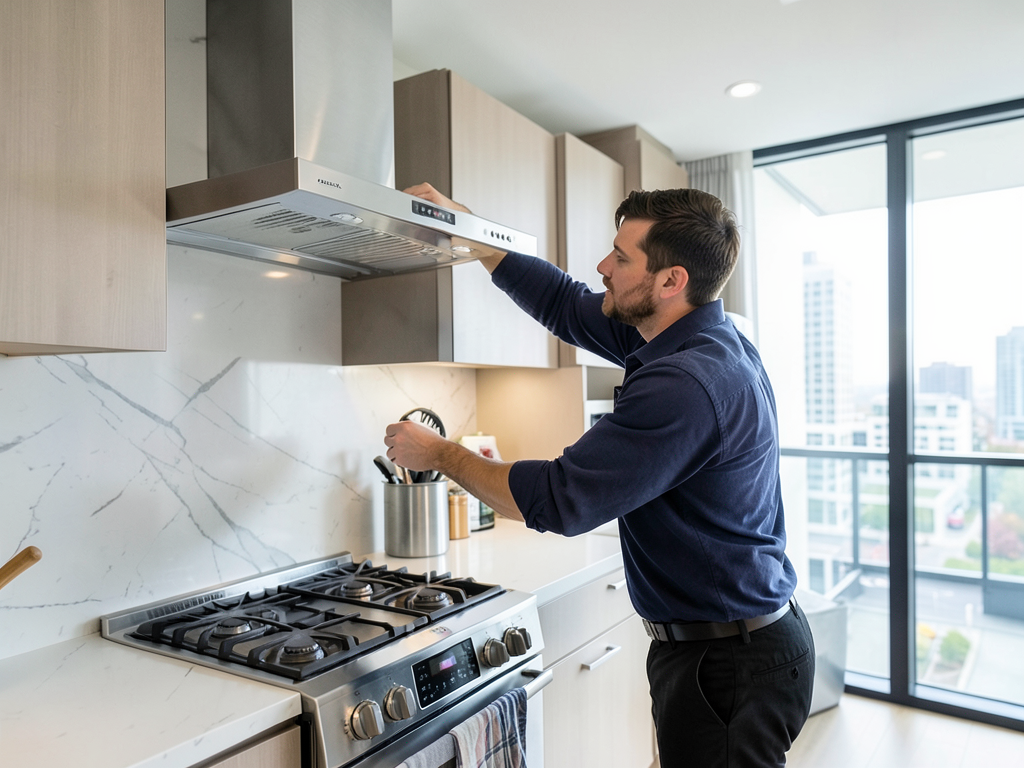
Many Midtown condos come with recirculating range hoods that simply filter and blow air back into the kitchen. While these seem convenient they are ineffective at removing odors and moisture. A vented system that exhausts to the building’s common duct is always superior.
The fix involves upgrading to a vented hood and potentially modifying your cabinet configuration. This often requires HOA approval since it may involve cutting into walls or modifying existing vent paths. The cost ranges from $800 to $2500 depending on your specific setup.
2. Clogged Common Exhaust Risers
Shared exhaust systems in Atlanta high-rises accumulate grease and debris over time. When these common risers get clogged your hood’s effectiveness drops dramatically. You might have a powerful 600 CFM hood but if the shared duct is 50% blocked you are only getting 300 CFM of actual exhaust.
Professional duct cleaning services can clear these shared systems. This requires coordination with your building management since the cleaning affects multiple units. Schedule this during off-peak hours to minimize disruption to neighbors.
3. Lack of Makeup Air MUA
When your range hood exhausts air equal volume must enter your condo to replace it. Without a dedicated makeup air system your condo might be pulling air from unwanted sources like bathroom exhaust fans causing them to backdraft or even from outside through gaps around windows.
A makeup air unit solves this by providing controlled replacement air. For hoods over 400 CFM Georgia mechanical code requires makeup air systems. These units can be installed in utility closets or adjacent to your HVAC system and typically cost $1200 to $2800 installed. Georgia Mechanical Code Ventilation Standards.
4. Incorrect Fan Sizing CFM Requirements
Many condo owners install powerful commercial-style hoods without understanding the building’s capacity to handle that airflow. A 1200 CFM hood might sound impressive but if your building’s common exhaust system can only handle 600 CFM you are creating more problems than you solve. City of Atlanta Planning Division.
The rule of thumb is 100 CFM per linear foot of range for standard cooking but condo buildings often need to derate this due to shared systems. A professional assessment can determine your building’s actual capacity and recommend appropriately sized equipment.
5. Backdrafting Issues
Backdrafting occurs when your range hood creates enough negative pressure to reverse the flow in other exhaust systems. You might notice your bathroom exhaust fan turning slowly backward or even see smoke from your stove being pulled back into the room instead of being exhausted.
This dangerous condition can also cause carbon monoxide from gas appliances to backdraft into your living space. Installing a powered makeup air system or reducing your hood’s exhaust capacity often solves backdrafting problems.
Atlanta Building Codes and HOA Restrictions
Navigating the regulatory landscape for condo ventilation modifications in Atlanta requires understanding both building codes and HOA restrictions. The Georgia State Minimum Standard Mechanical Code sets requirements but your HOA may have additional limitations.
Georgia Mechanical Code Requirements mandate makeup air for exhaust systems over 400 CFM in residential settings. This applies to most modern condo kitchens with professional-style ranges. The code also requires proper venting to the exterior and prohibits exhausting into attics or common spaces within the building.
Navigating HOA Approval for Exterior Venting can be challenging in Atlanta’s high-rise buildings. Many buildings prohibit modifications to exterior walls or roof penetrations. This means you might need to work within the existing building infrastructure rather than creating new vent paths. Some HOAs require architectural review for any ventilation modifications even those that do not affect the building’s exterior.
Building Permit Requirements vary by municipality within the Atlanta metro area. Atlanta proper requires permits for most ventilation modifications while some surrounding cities have different requirements. Always check with your building management and local authorities before starting work.
Professional Solutions for Atlanta Residents
When DIY fixes are not enough professional solutions can transform your condo’s air quality. Here are the most effective options for Atlanta residents dealing with persistent ventilation problems.
Inline Fan Installations
Inline fans can boost the performance of existing ductwork without requiring major modifications. These fans are installed within the duct run and can increase airflow by 30 to 50 percent. They are particularly useful in buildings where the main exhaust fan is undersized for current demand.
Installation typically takes 4 to 6 hours and costs between $800 and $1500. The fan is controlled by a switch near your range hood allowing you to activate it only when needed. Comparing Costs for a New AC Unit in Sandy Springs.
High-Efficiency Carbon Filtration
For situations where exterior venting is not possible high-efficiency carbon filtration systems can dramatically improve odor removal. These are not your standard recirculating hood filters but industrial-grade systems that capture grease smoke and odor molecules.
Professional-grade carbon filters can remove up to 95 percent of cooking odors and cost $300 to $600 for the filter assembly with replacement filters needed every 6 to 12 months at $100 to $200 each.
Duct Sealing and Air Balancing
Many ventilation problems stem from leaky or improperly balanced ductwork. Professional duct sealing can improve system efficiency by 20 to 30 percent by eliminating leaks in shared exhaust systems. This process involves using specialized mastic or aerosol sealants to close gaps in ductwork.
Air balancing ensures that your hood is receiving adequate airflow relative to other units on the same system. This might involve adjusting dampers or modifying the common exhaust fan’s operation schedule.
Condo Ventilation Checklist
Before calling a professional run through this checklist to identify potential ventilation issues in your Midtown condo:
- Check if your range hood is vented to the exterior or recirculating
- Test airflow by holding a tissue near the vent while running
- Inspect for moisture on walls or windows during cooking
- Listen for unusual noises from your hood that might indicate motor issues
- Check if bathroom exhaust fans reverse when the range hood runs
- Review your HOA documents for ventilation modification restrictions
- Examine your electrical panel to ensure it can handle upgraded equipment
The Impact of Atlanta’s Climate on Condo Ventilation
Atlanta’s unique climate creates additional challenges for condo ventilation that residents in other cities do not face. Understanding these local factors helps explain why standard solutions might not work in your Midtown high-rise.
High Humidity Levels in Atlanta averaging 70 percent annually mean that ventilation systems must handle significant moisture loads. When you cook pasta or boil water that moisture needs to be removed quickly before it condenses on cool surfaces. Standard ventilation that works in drier climates often fails in Atlanta’s humid conditions.
Pollen Season Considerations affect filter choices and maintenance schedules. During spring months Atlanta’s notorious pollen can clog filters faster than expected. Your ventilation system needs appropriately sized filters and a maintenance schedule that accounts for seasonal changes. The Only HVAC Maintenance Plan Dunwoody Homeowners Actually Need.
Temperature Swings between summer and winter in Atlanta create varying pressure conditions in high-rise buildings. A ventilation system that works perfectly in January might struggle in July due to different stack effect conditions. Professional solutions need to account for these seasonal variations.
Cost Factors for Condo Ventilation Improvements
Understanding the investment required for different ventilation solutions helps you budget appropriately. Here is what Atlanta residents typically spend on various improvements:
| Solution | Typical Cost Range | Expected Improvement |
|---|---|---|
| Professional duct cleaning | $300 to $600 | 20 to 30 percent airflow increase |
| Makeup air unit installation | $1200 to $2800 | Eliminates backdrafting |
| Inline fan installation | $800 to $1500 | 30 to 50 percent airflow boost |
| Carbon filtration upgrade | $300 to $600 plus $100 to $200 annually | 95 percent odor removal |
| Complete ventilation system overhaul | $2500 to $6000 | Comprehensive solution |
Seasonal Ventilation Challenges in Atlanta
Atlanta’s climate creates different ventilation challenges throughout the year. Understanding these seasonal variations helps you maintain optimal air quality year-round.
| Season | Primary Challenge | Recommended Solution |
|---|---|---|
| Spring | Pollen infiltration | HEPA filtration upgrade |
| Summer | High humidity | Enhanced moisture removal |
| Fall | Temperature swings | Pressure balancing |
| Winter | Stack effect reversal | Makeup air optimization |
Maintenance Tips for Long-Term Performance
Even the best ventilation system needs regular maintenance to perform optimally. Here are maintenance practices that keep your Midtown condo’s air quality high year-round.
Monthly Filter Cleaning or Replacement prevents the most common ventilation failures. Grease filters should be cleaned every 30 days while charcoal filters need replacement every 6 to 12 months depending on usage. Set calendar reminders to avoid forgetting this crucial task.
Quarterly System Checks involve testing your hood’s airflow listening for unusual noises and inspecting visible ductwork for dust accumulation. These quick inspections can catch problems before they become major issues.
Annual Professional Maintenance includes deep cleaning of internal components checking motor performance and testing electrical connections. This service typically costs $150 to $250 but can prevent costly emergency repairs.
Seasonal Adjustments might be necessary in Atlanta due to our climate variations. Your ventilation needs in August differ from those in January. Some systems allow for seasonal adjustments to fan speeds or damper positions.
Frequently Asked Questions
Can I install a more powerful range hood in my condo?
Possibly but you need to check building capacity and HOA restrictions first. Many high-rises have limits on how much exhaust can be pulled from individual units. A professional assessment can determine what is possible in your specific building.
Why does my neighbor’s cooking smell come into my unit?
This usually indicates problems with the common exhaust stack or inadequate sealing between units. Shared ductwork can allow odors to migrate between apartments if the system is not properly designed or maintained.
How much does it cost to fix condo ventilation problems?
Costs vary widely based on the specific issue. Simple fixes like filter replacement might cost under $100 while comprehensive system overhauls can exceed $5000. Most Midtown residents spend between $800 and $2500 for effective solutions.
Will improving my kitchen ventilation increase my energy bills?
Properly designed ventilation systems should not significantly increase energy costs. In fact systems with makeup air often improve efficiency by preventing the HVAC system from working harder to compensate for negative pressure.
Do I need permits for ventilation modifications in Atlanta?
Most ventilation modifications require permits from the City of Atlanta or your local municipality. Your building management can provide guidance and professional HVAC contractors typically handle permit acquisition as part of their service.
Living with persistent cooking smells and poor ventilation in your Midtown high-rise condo does not have to be permanent. Whether you need a simple filter upgrade or a comprehensive system overhaul understanding your building’s specific challenges is the first step toward fresh clean air in your kitchen.
Atlanta’s unique climate and building stock create ventilation challenges that require specialized knowledge to solve effectively. Do not settle for temporary fixes that mask the problem. Professional assessment and targeted solutions can transform your condo’s air quality and eliminate those frustrating lingering odors.
Ready to breathe easier in your Midtown condo? Summit HVAC Atlanta specializes in high-rise ventilation solutions throughout the Atlanta area. Our technicians understand the unique challenges of condo living and can recommend solutions that work within your building’s constraints.
Call Summit HVAC Atlanta today at (770) 600-9611 to schedule your ventilation assessment. We will diagnose your specific issues and provide clear recommendations for achieving the fresh odor-free kitchen you deserve. Do not let another day of cooking odors ruin your condo living experience.
Summit HVAC Atlanta Your trusted experts for comfortable healthy indoor air in Atlanta’s high-rise buildings.
{
“@context”: “https://schema.org”,
“@type”: “BlogPosting”,
“headline”: “Solving Cooking Smells and Poor Ventilation in Your Midtown High Rise Condo”,
“description”: “Eliminate cooking odors and improve air quality in your Midtown Atlanta high-rise condo with expert ventilation solutions tailored to shared building systems.”,
“wordCount”: 2479,
“datePublished”: “2026-06-13T07:20:00.000Z”,
“dateModified”: “2026-06-13T07:20:00.000Z”,
“inLanguage”: “en-US”,
“mainEntityOfPage”: {
“@type”: “WebPage”,
“@id”: “https://summithvacatlanta.com”
},
“publisher”: {
“@type”: “LocalBusiness”,
“name”: “Summit HVAC Atlanta”,
“url”: “https://summithvacatlanta.com”
},
“author”: {
“@type”: “Organization”,
“name”: “Summit HVAC Atlanta”,
“url”: “https://summithvacatlanta.com”
},
“image”: {
“@type”: “ImageObject”,
“url”: “https://summithvacatlanta.com/wp-content/uploads/2026/03/solving-cooking-smells-and-poor-ventilation-in-you-1.png”
}
}
{
“@context”: “https://schema.org”,
“@type”: “HVACBusiness”,
“name”: “Summit HVAC Atlanta”,
“url”: “https://summithvacatlanta.com”,
“address”: {
“@type”: “PostalAddress”,
“addressLocality”: “Atlanta”
},
“areaServed”: {
“@type”: “City”,
“name”: “Atlanta”
}
}
{
“@context”: “https://schema.org”,
“@type”: “FAQPage”,
“mainEntity”: [
{
“@type”: “Question”,
“name”: “Can I install a more powerful range hood in my condo?”,
“acceptedAnswer”: {
“@type”: “Answer”,
“text”: “Possibly but you need to check building capacity and HOA restrictions first. Many high-rises have limits on how much exhaust can be pulled from individual units. A professional assessment can determine what is possible in your specific building.”
}
},
{
“@type”: “Question”,
“name”: “Why does my neighbor’s cooking smell come into my unit?”,
“acceptedAnswer”: {
“@type”: “Answer”,
“text”: “This usually indicates problems with the common exhaust stack or inadequate sealing between units. Shared ductwork can allow odors to migrate between apartments if the system is not properly designed or maintained.”
}
},
{
“@type”: “Question”,
“name”: “How much does it cost to fix condo ventilation problems?”,
“acceptedAnswer”: {
“@type”: “Answer”,
“text”: “Costs vary widely based on the specific issue. Simple fixes like filter replacement might cost under $100 while comprehensive system overhauls can exceed $5000. Most Midtown residents spend between $800 and $2500 for effective solutions.”
}
},
{
“@type”: “Question”,
“name”: “Will improving my kitchen ventilation increase my energy bills?”,
“acceptedAnswer”: {
“@type”: “Answer”,
“text”: “Properly designed ventilation systems should not significantly increase energy costs. In fact systems with makeup air often improve efficiency by preventing the HVAC system from working harder to compensate for negative pressure.”
}
},
{
“@type”: “Question”,
“name”: “Do I need permits for ventilation modifications in Atlanta?”,
“acceptedAnswer”: {
“@type”: “Answer”,
“text”: “Most ventilation modifications require permits from the City of Atlanta or your local municipality. Your building management can provide guidance and professional HVAC contractors typically handle permit acquisition as part of their service.”
}
}
]
}
{
“@context”: “https://schema.org”,
“@type”: “BreadcrumbList”,
“itemListElement”: [
{
“@type”: “ListItem”,
“position”: 1,
“name”: “Home”,
“item”: “https://summithvacatlanta.com”
},
{
“@type”: “ListItem”,
“position”: 2,
“name”: “Blog”,
“item”: “https://summithvacatlanta.com/blog”
},
{
“@type”: “ListItem”,
“position”: 3,
“name”: “Solving Cooking Smells and Poor Ventilation in Your Midtown High Rise Condo”
}
]
}
{
“@context”: “https://schema.org”,
“@type”: “Service”,
“serviceType”: “HVAC”,
“provider”: {
“@type”: “LocalBusiness”,
“name”: “Summit HVAC Atlanta”,
“url”: “https://summithvacatlanta.com”
},
“areaServed”: {
“@type”: “City”,
“name”: “Atlanta”
},
“description”: “Eliminate cooking odors and improve air quality in your Midtown Atlanta high-rise condo with expert ventilation solutions tailored to shared building systems.”
}