
Trane vs Carrier vs Rheem — which HVAC brand handles the Atlanta heat best
Atlanta summers push air conditioning systems to their limits. The combination of 90°F+ temperatures and humidity levels that regularly exceed 70% creates a unique challenge for HVAC equipment. When you’re comparing major brands like Trane, Carrier, and Rheem, you need to understand how each performs in Georgia’s specific climate conditions. Comparing Costs for a New AC Unit in Sandy Springs.
The right choice depends on more than just price or brand reputation. It requires understanding how these systems handle Atlanta’s high humidity, frequent afternoon thunderstorms, and the occasional deep freeze that tests heat pump performance. Let’s examine what makes certain brands better suited for Georgia homes.
Atlanta’s Climate Demands More From Your HVAC System
Atlanta sits in the humid subtropical climate zone. This means your air conditioner doesn’t just cool air—it must also remove massive amounts of moisture. A typical summer day in Buckhead or Midtown might see temperatures climb to 92°F with humidity levels making it feel like 102°F.
This creates what HVAC professionals call a high latent heat load. Your system must run longer to pull moisture from the air. Single-stage air conditioners often short-cycle in these conditions, cooling the air but leaving humidity behind. This is why variable-speed compressors have become so important in Atlanta homes.
Georgia Power’s energy data shows Atlanta homeowners use their air conditioning an average of 1,500 hours per cooling season. That’s significantly more than the national average of 1,200 hours. Your HVAC equipment needs to handle this extended runtime without breaking down.
Comparing the Top Three Brands for Atlanta Homes
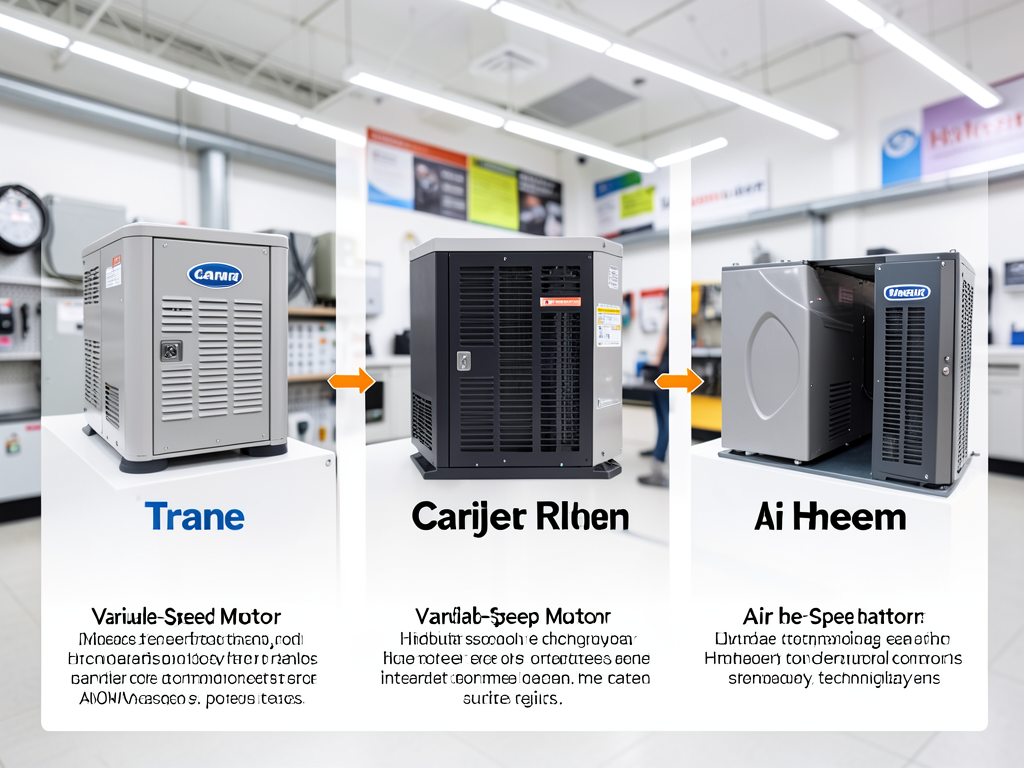
Each major brand approaches Atlanta’s climate challenges differently. Here’s how Trane, Carrier, and Rheem stack up when it comes to handling Georgia’s heat and humidity.
Trane: Built for Reliability in Harsh Conditions
Trane systems have earned a reputation for durability in hot, humid climates. Their proprietary Climatuff compressors are designed to handle extended run times without overheating. Many units installed in Atlanta’s historic neighborhoods like Inman Park have been running strong for 15-20 years.
Trane’s variable-speed systems excel at humidity control. Their ComfortLink II technology allows the system to adjust compressor speed in 1% increments, maintaining consistent temperatures while removing moisture. This is particularly valuable in older Craftsman homes in Virginia-Highland where ductwork might not be perfectly sealed.
The brand’s Coastal models feature enhanced corrosion protection—important for Atlanta’s pollen season when HVAC coils collect debris that can lead to premature failure.
Carrier: Innovation Meets Performance
Carrier pioneered modern air conditioning and continues to innovate with their Greenspeed Intelligence technology. Their Infinity series variable-speed systems can modulate between 40% and 100% capacity, making them excellent for Atlanta’s humidity challenges.
Carrier’s Puron refrigerant systems are designed to meet future efficiency standards. Their two-stage compressors provide better humidity control than single-stage units while maintaining good energy efficiency. This makes them a solid choice for Brookhaven homes where energy costs are a concern.
The brand’s performance in Atlanta’s pollen-heavy spring months is noteworthy. Their advanced filtration options can handle the yellow dust that coats everything during peak pollen season.
Rheem: Value Without Compromise
Rheem offers excellent value for Atlanta homeowners. Their Prestige Series variable-speed units provide humidity control comparable to premium brands at a more accessible price point. This makes them popular in Sandy Springs neighborhoods where homeowners want reliability without premium pricing.
Rheem’s EcoNet technology allows for smart home integration and remote monitoring. This can be valuable during Atlanta’s summer thunderstorm season when power surges might affect system operation.
The brand’s warranty coverage is competitive, and their parts availability in the Atlanta metro area is excellent. This means faster repairs when something does go wrong during the peak cooling season.
Technical Comparison: SEER2 Ratings and Performance
Understanding efficiency ratings helps you make informed decisions. Here’s how the top brands compare in Atlanta’s climate:
| Brand/Model | SEER2 Rating | Humidity Control | Atlanta Price Range |
|---|---|---|---|
| Trane XV20i | 22.0 | Excellent | $6,500-$8,500 |
| Carrier Infinity 24ANB1 | 24.0 | Excellent | $6,200-$8,000 |
| Rheem Prestige RP20 | 20.0 | Very Good | $5,800-$7,200 |
| Trane XR15 | 16.0 | Good | $4,500-$5,800 |
| Carrier Comfort 16 | 16.0 | Fair | $4,200-$5,500 |
| Rheem Classic Series | 14.0 | Basic | $3,800-$4,900 |
SEER2 ratings are more accurate than the old SEER ratings because they account for real-world conditions including humidity. In Atlanta’s climate, you’ll typically see 10-15% less efficiency than the rated numbers.
Best Brands for Atlanta’s Humidity Control
Humidity control is the most critical factor for Atlanta homeowners. Here’s how each brand handles moisture removal:
- Trane XV20i: Removes up to 24 gallons of moisture per day. Best for homes in older Atlanta neighborhoods with less-than-perfect ductwork.
- Carrier Infinity: Removes 22 gallons per day with superior temperature consistency. Excellent for modern homes in Midtown.
- Rheem Prestige: Removes 20 gallons per day with good energy efficiency. Great value for Sandy Springs homes.
Variable-speed systems run longer at lower speeds, which is ideal for Atlanta’s humidity. They maintain 45-50% relative humidity indoors, compared to 55-60% with single-stage units.
According to the U.S. Department of Energy, proper humidity control can reduce cooling costs by up to 25% in humid climates.
Heat Pumps vs. Gas Furnaces in Atlanta
Atlanta’s mild winters make heat pumps an attractive option. Modern cold-climate heat pumps can operate efficiently down to 20°F, which covers 95% of Atlanta’s winter days.
Trane’s XV20i heat pump with ComfortLink II provides both excellent cooling and heating. Carrier’s Infinity heat pump offers similar performance with Greenspeed Intelligence. Rheem’s Prestige heat pump delivers solid performance at a competitive price.
For homes with existing natural gas service, a dual-fuel system might be worth considering. These systems use a heat pump for most heating and switch to gas when temperatures drop below freezing. This provides the best efficiency for Atlanta’s climate.
The Georgia Power offers rebates for high-efficiency heat pumps, making them even more attractive financially.
Local Rebates and Incentives
Atlanta homeowners can save significantly with available rebates and tax credits. Current incentives include:
- Federal Tax Credit: 30% of installation costs up to $2,000 for Energy Star certified systems
- Georgia Power Rebates: Up to $450 for heat pumps meeting efficiency requirements
- Atlanta Gas Light: Rebates for high-efficiency gas furnaces when converting from electric
These incentives can reduce your net cost by $1,500-$3,000 depending on the system you choose. They’re available for all three major brands when you select qualifying models.
The Energy Star program maintains current information on federal tax credits and certified equipment.
Warranty and Service Considerations
All three brands offer strong warranties, but the details matter:
| Brand | Compressor Warranty | Parts Warranty | Registered Warranty |
|---|---|---|---|
| Trane | 12 years | 10 years | Yes |
| Carrier | 10 years | 10 years | Yes |
| Rheem | 10 years | 10 years | Yes |
Registering your warranty within 60 days of installation is crucial. Unregistered warranties often reduce to 5 years on parts and 1 year on the compressor.
Service availability is another consideration. All three brands have strong distribution networks in Atlanta. Trane and Carrier have more specialized dealers, while Rheem is widely available through multiple channels. Specialized HVAC Solutions for Historic Virginia-Highland Homes.
Installation Quality Matters More Than Brand
Even the best HVAC brand will underperform if installed incorrectly. Proper sizing using Manual J calculations, correct refrigerant charge, and proper ductwork sealing are critical.
Atlanta’s red clay soil can cause foundation settling that affects outdoor unit stability. Proper installation includes concrete pads with proper leveling and drainage.
Electrical requirements vary by system size. Older Atlanta homes, particularly in historic districts, may need electrical panel upgrades to support modern high-efficiency systems.
Making Your Decision
The best brand for your Atlanta home depends on your specific situation:
- Choose Trane if you want maximum reliability and have an older home with potential ductwork issues.
- Choose Carrier if you want cutting-edge technology and superior humidity control.
- Choose Rheem if you want good performance at a more accessible price point.
For most Atlanta homeowners, a variable-speed system from any of these brands will provide excellent performance. The key is proper sizing and professional installation.
Consider your home’s age, existing ductwork condition, and energy efficiency goals. A home energy audit can help identify the best solution for your specific situation.
Remember that the cheapest option often costs more in the long run through higher energy bills and more frequent repairs. Quality installation and the right size system matter more than minor differences between brands. Improving the Air Quality in Your Brookhaven Home During Pollen Season.
Frequently Asked Questions
What size HVAC system do I need for my Atlanta home?
System size depends on your home’s square footage, insulation levels, window orientation, and local climate. A typical Atlanta home needs 18-24 BTUs per square foot, but a professional Manual J calculation is essential for proper sizing.
How long should an HVAC system last in Atlanta’s climate?
With proper maintenance, expect 15-20 years from a quality system. Atlanta’s humidity and extended cooling season can reduce lifespan slightly compared to milder climates, but regular maintenance helps maximize longevity. The Only HVAC Maintenance Plan Dunwoody Homeowners Actually Need.
Are heat pumps effective in Atlanta winters?
Yes. Modern heat pumps work efficiently in Atlanta’s mild winters, handling temperatures down to about 20°F. They’re often more cost-effective than gas furnaces for Atlanta’s climate, though dual-fuel systems provide backup for the coldest days.
How much can I save with a high-efficiency system?
High-efficiency systems can reduce cooling costs by 30-50% compared to older units. In Atlanta, where cooling is used extensively, these savings can amount to $300-$600 per year, making the investment pay off in 5-8 years.
Should I replace my ductwork when replacing my HVAC system?
Not always, but it’s worth evaluating. Leaky or poorly insulated ducts can waste 20-30% of your cooling energy. If your ducts are over 15 years old or located in unconditioned spaces, replacement might be worthwhile.
Ready to Beat the Atlanta Heat?
Choosing the right HVAC system is a significant investment in your home’s comfort and efficiency. Whether you’re leaning toward Trane’s reliability, Carrier’s innovation, or Rheem’s value, professional installation makes all the difference.
Don’t wait until your current system fails on the hottest day of the year. Contact Summit HVAC Atlanta today for a free consultation and estimate. We’ll help you understand your options and find the perfect system for your Atlanta home.
Call us now at (770) 600-9611 or schedule your free estimate online. Our experienced technicians serve Buckhead, Midtown, Sandy Springs, and all of Atlanta with fast, reliable service you can trust.
You may also find this helpful. Syncing Your Alpharetta HVAC with Your Whole Home Automation System.
You may also find this helpful. Why the Third Floor of Your Smyrna Townhome is Always Unbearably Hot.
{
“@context”: “https://schema.org”,
“@type”: “BlogPosting”,
“headline”: “Trane vs Carrier vs Rheem — which HVAC brand handles the Atlanta heat best”,
“description”: “Comparing Trane, Carrier, and Rheem HVAC brands for Atlanta’s humid summers. Find out which handles Georgia heat best with real performance data.”,
“wordCount”: 1737,
“datePublished”: “2026-05-30T05:56:00.000Z”,
“dateModified”: “2026-05-30T05:56:00.000Z”,
“inLanguage”: “en-US”,
“mainEntityOfPage”: {
“@type”: “WebPage”,
“@id”: “https://summithvacatlanta.com”
},
“publisher”: {
“@type”: “LocalBusiness”,
“name”: “Summit HVAC Atlanta”,
“url”: “https://summithvacatlanta.com”
},
“author”: {
“@type”: “Organization”,
“name”: “Summit HVAC Atlanta”,
“url”: “https://summithvacatlanta.com”
},
“image”: {
“@type”: “ImageObject”,
“url”: “https://summithvacatlanta.com/wp-content/uploads/2026/03/trane-vs-carrier-vs-rheem-which-hvac-brand-handles-1.png”
}
}
{
“@context”: “https://schema.org”,
“@type”: “HVACBusiness”,
“name”: “Summit HVAC Atlanta”,
“url”: “https://summithvacatlanta.com”,
“address”: {
“@type”: “PostalAddress”,
“addressLocality”: “Atlanta”
},
“areaServed”: {
“@type”: “City”,
“name”: “Atlanta”
}
}
{
“@context”: “https://schema.org”,
“@type”: “FAQPage”,
“mainEntity”: [
{
“@type”: “Question”,
“name”: “What size HVAC system do I need for my Atlanta home?”,
“acceptedAnswer”: {
“@type”: “Answer”,
“text”: “System size depends on your home’s square footage, insulation levels, window orientation, and local climate. A typical Atlanta home needs 18-24 BTUs per square foot, but a professional Manual J calculation is essential for proper sizing.”
}
},
{
“@type”: “Question”,
“name”: “How long should an HVAC system last in Atlanta’s climate?”,
“acceptedAnswer”: {
“@type”: “Answer”,
“text”: “With proper maintenance, expect 15-20 years from a quality system. Atlanta’s humidity and extended cooling season can reduce lifespan slightly compared to milder climates, but regular maintenance helps maximize longevity. The Only HVAC Maintenance Plan Dunwoody Homeowners Actually Need.”
}
},
{
“@type”: “Question”,
“name”: “Are heat pumps effective in Atlanta winters?”,
“acceptedAnswer”: {
“@type”: “Answer”,
“text”: “Yes. Modern heat pumps work efficiently in Atlanta’s mild winters, handling temperatures down to about 20°F. They’re often more cost-effective than gas furnaces for Atlanta’s climate, though dual-fuel systems provide backup for the coldest days.”
}
},
{
“@type”: “Question”,
“name”: “Should I replace my ductwork when replacing my HVAC system?”,
“acceptedAnswer”: {
“@type”: “Answer”,
“text”: “Not always, but it’s worth evaluating. Leaky or poorly insulated ducts can waste 20-30% of your cooling energy. If your ducts are over 15 years old or located in unconditioned spaces, replacement might be worthwhile.”
}
},
{
“@type”: “Question”,
“name”: “Ready to Beat the Atlanta Heat?”,
“acceptedAnswer”: {
“@type”: “Answer”,
“text”: “Choosing the right HVAC system is a significant investment in your home’s comfort and efficiency. Whether you’re leaning toward Trane’s reliability, Carrier’s innovation, or Rheem’s value, professional installation makes all the difference.”
}
}
]
}
{
“@context”: “https://schema.org”,
“@type”: “BreadcrumbList”,
“itemListElement”: [
{
“@type”: “ListItem”,
“position”: 1,
“name”: “Home”,
“item”: “https://summithvacatlanta.com”
},
{
“@type”: “ListItem”,
“position”: 2,
“name”: “Blog”,
“item”: “https://summithvacatlanta.com/blog”
},
{
“@type”: “ListItem”,
“position”: 3,
“name”: “Trane vs Carrier vs Rheem — which HVAC brand handles the Atlanta heat best”
}
]
}
{
“@context”: “https://schema.org”,
“@type”: “Service”,
“serviceType”: “HVAC”,
“provider”: {
“@type”: “LocalBusiness”,
“name”: “Summit HVAC Atlanta”,
“url”: “https://summithvacatlanta.com”
},
“areaServed”: {
“@type”: “City”,
“name”: “Atlanta”
},
“description”: “Comparing Trane, Carrier, and Rheem HVAC brands for Atlanta’s humid summers. Find out which handles Georgia heat best with real performance data.”
}