
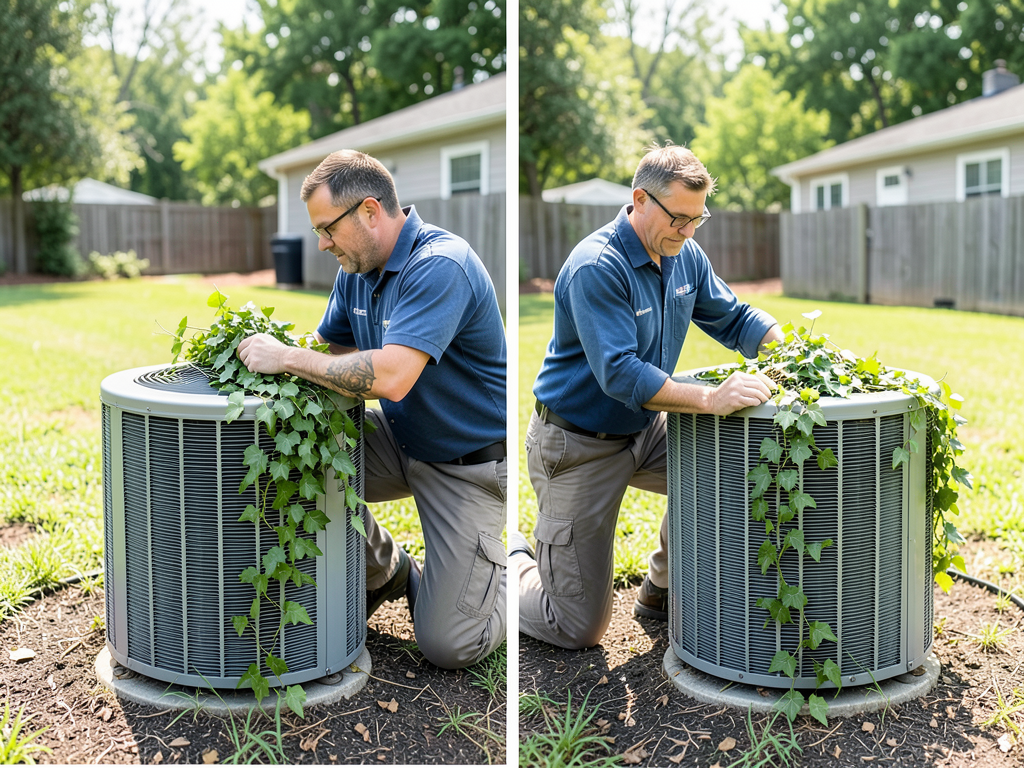
Why the English Ivy in Your Dunwoody Yard is a Secret Threat to Your AC Unit
The lush English Ivy climbing your Dunwoody fence might look charming but it could be slowly destroying your air conditioning system. Many Atlanta homeowners don’t realize how quickly this aggressive vine can grow into their outdoor condenser unit creating a cascade of problems that lead to expensive repairs or even complete system failure. EPA guide on HVAC maintenance.
Dunwoody’s warm humid climate creates perfect conditions for English Ivy to thrive. The plant grows rapidly during Georgia’s long growing season and can completely engulf an AC unit within weeks if left unchecked. What starts as a few innocent tendrils can quickly become a dense mat of vegetation that blocks airflow and traps heat against your condenser coils. Why Dunwoody Families Trust Our Seasonal HVAC Maintenance Plans.
Understanding how this seemingly harmless plant threatens your HVAC system is the first step toward protecting your investment. The damage occurs through multiple mechanisms that work together to reduce efficiency and cause mechanical stress on critical components.
How English Ivy Damages Your AC Unit
The primary way English Ivy harms your air conditioner is by restricting airflow across the condenser coils. These coils need constant air movement to release heat from your home. When vines grow into the unit they create a physical barrier that prevents air from passing through the aluminum fins.
This restricted airflow forces your system to work harder to achieve the same cooling effect. The compressor must run longer cycles trying to push refrigerant through the system. Over time this increased workload leads to premature wear on bearings motors and electrical components.
English Ivy also traps moisture against metal surfaces accelerating corrosion. The combination of trapped humidity and organic material creates ideal conditions for mold and mildew growth inside your unit. These organisms can clog drain lines and coat coils with a slimy film that further reduces heat transfer efficiency.
The plant’s root system poses another threat. As ivy tendrils grow into small openings they can bend or break the delicate aluminum fins that line your condenser. These fins are essential for heat dissipation and once damaged they cannot be easily repaired. The roots can also work their way into electrical connections creating short circuits or control board failures.
The Hidden Cost of Ignoring Ivy Growth
Many Dunwoody homeowners don’t notice the gradual impact of plant growth on their AC systems until they receive a shockingly high electric bill. Restricted airflow can reduce your system’s efficiency by 30% or more forcing it to run longer to maintain comfortable temperatures. The Only HVAC Maintenance Plan Dunwoody Homeowners Actually Need.
The increased runtime translates directly to higher energy costs. A system that normally uses 3,000 watts might consume 4,000 watts when struggling against airflow restrictions. Over a summer season this difference can add hundreds of dollars to your utility bills. Comparing Costs for a New AC Unit in Sandy Springs.
Beyond energy costs the mechanical stress from restricted airflow shortens your system’s lifespan. Compressors that should last 15 years might fail after 8 or 10 when constantly overworked. Replacing a compressor often costs as much as a new system making prevention far more economical than repair.
Insurance companies may also deny claims for damage caused by lack of maintenance. If your unit fails due to vegetation buildup that you could have prevented they might consider it neglect rather than a covered mechanical failure.
Why Dunwoody’s Climate Makes Ivy Particularly Dangerous
Dunwoody’s location in the humid subtropical climate zone creates conditions that accelerate both ivy growth and AC system problems. The area receives over 50 inches of rainfall annually providing ample moisture for rapid plant growth.
Summer temperatures regularly exceed 90 degrees Fahrenheit combined with high humidity levels that can exceed 70%. These conditions cause English Ivy to grow at an accelerated rate often adding several inches per week during peak growing season.
The same humidity that helps ivy thrive also makes your AC work harder. When outside air is already saturated with moisture your system must remove more water vapor to achieve comfortable indoor conditions. This extra load means your condenser is already working near capacity when ivy growth begins restricting airflow.
Dunwoody’s mild winters allow ivy to maintain active growth nearly year-round. Unlike northern regions where cold weather naturally controls vine growth Georgia’s climate means ivy can establish itself and cause damage even during cooler months when you might not be thinking about your air conditioning system.
Creating the Essential Clearance Zone
Maintaining proper clearance around your AC unit is the most effective way to prevent ivy damage. The general rule is to keep all vegetation at least two feet away from the unit on all sides. This clearance allows for adequate airflow and provides space for maintenance access.
For English Ivy specifically you need to be even more aggressive. This vine can send runners under mulch or soil for several feet before emerging near your unit. Creating a gravel barrier zone at least three feet wide around your condenser creates a buffer that prevents underground runners from reaching the equipment.
The area above your unit also requires clearance. Ivy growing on nearby structures can drop leaves and debris onto the condenser. Maintaining at least five feet of vertical clearance prevents this buildup and allows heat to dissipate upward from the unit.
Consider installing physical barriers to prevent ivy encroachment. Metal edging driven several inches into the ground creates an underground wall that blocks root spread. Landscape fabric covered with gravel provides a low-maintenance zone that ivy cannot penetrate.
Safe Removal Techniques for Established Growth
If ivy has already grown into your AC unit you need to remove it carefully to avoid causing additional damage. Never simply pull vines away from the unit as this can bend fins or pull out electrical connections.
Start by cutting all visible vines at the base using pruning shears or a small saw. Allow the cut vines to die and dry out for several days. Dead ivy is much easier to remove without damaging surrounding components.
Once the vines are dead use a soft brush to gently remove dead material from the unit. Work from the outside in using light pressure to avoid bending fins. For material trapped between fins use a fin comb or compressed air to blow out debris.
Check for any remaining live growth inside the unit. Ivy can regrow from small root fragments left behind. If you find active growth use a systemic herbicide applied with a brush to kill the remaining plant material without spraying chemicals into your AC system.
After removing all vegetation inspect your unit for damage. Bent fins can be straightened with a fin comb available at most hardware stores. Check electrical connections for corrosion or damage from root intrusion.
Professional Cleaning and Maintenance Options
While DIY removal works for minor growth severe infestations often require professional intervention. HVAC technicians have specialized tools for deep cleaning coils and can identify damage that might not be visible to homeowners. Specialized HVAC Solutions for Historic Virginia-Highland Homes.
Professional coil cleaning involves using foaming cleaners that penetrate between fins to dissolve organic buildup. Technicians use low-pressure washing to remove debris without damaging delicate components. This process can restore 10-15% of lost efficiency in systems affected by vegetation growth.
Annual maintenance contracts often include vegetation inspection and removal as part of the service. These preventive visits catch ivy growth before it becomes severe saving you from emergency repairs during peak cooling season.
Professional services also include checking for pest infestations that often accompany vegetation growth. Rodents and insects frequently nest in overgrown units creating additional problems beyond the plant damage itself.
Alternative Landscaping for AC Protection
Instead of English Ivy consider using plant species that won’t threaten your AC system. Many attractive ground covers provide the same visual appeal without the aggressive growth habits that make ivy problematic.
Low-growing ornamental grasses like blue fescue or dwarf mondo grass create attractive borders without spreading into your equipment. These plants typically stay under 12 inches tall and don’t produce runners that can invade your unit.
Decorative gravel beds provide excellent protection while requiring virtually no maintenance. Choose gravel in colors that complement your home’s exterior and install edging to create clean lines around your AC pad.
For homeowners who want living ground cover consider creeping thyme or sedum species. These plants form dense mats that suppress weeds but don’t grow tall enough to interfere with airflow or produce aggressive root systems.
Strategic use of hardscaping elements like pavers or decorative stone can create attractive barriers that prevent plant encroachment while adding visual interest to your landscape design.
Understanding the Science of Airflow Restriction
The impact of vegetation on AC performance relates directly to principles of fluid dynamics and heat transfer. Your condenser relies on moving large volumes of air across coils to dissipate heat collected from inside your home.
When airflow is restricted the system’s static pressure increases. This higher pressure forces the fan motor to work harder consuming more electricity while moving less air. The relationship between pressure and airflow follows what engineers call the fan curve – as pressure increases airflow decreases exponentially.
Heat transfer from the coils also becomes less efficient when airflow is restricted. The temperature difference between the hot refrigerant and the surrounding air determines how quickly heat moves from the coils. With restricted airflow this temperature gradient decreases reducing the system’s ability to release heat.
The compressor responds to these conditions by running longer cycles trying to achieve the same cooling effect. This extended operation generates more heat within the unit creating a feedback loop where the system works harder but accomplishes less.
Modern AC units with variable speed compressors can sometimes adapt to minor restrictions by running at higher speeds. However this adaptation comes at the cost of increased energy consumption and accelerated component wear.
Common Mistakes That Worsen the Problem
Many homeowners inadvertently make ivy problems worse through common landscaping mistakes. Planting shrubs or flowers too close to the unit creates a microclimate that encourages vine growth while blocking airflow.
Using landscape fabric directly against the AC pad seems like a good idea but actually creates a perfect environment for weed seeds to germinate along the edges. These weeds often include aggressive vines that quickly find their way into your equipment.
Installing privacy screens or lattice around your unit might seem like a good way to hide the equipment but these structures can trap heat and restrict the vertical airflow that’s essential for proper operation. If you must screen your unit use open designs that allow at least 70% air passage.
Overmulching around your AC creates several problems. Mulch holds moisture against the unit’s base promoting corrosion. It also provides an ideal growing medium for seeds that blow in from nearby plants. Keep mulch at least 18 inches away from your condenser and use gravel instead within that critical zone.
Neglecting regular maintenance allows small problems to become major failures. A few vines growing near your unit this month can become a complete infestation next month during Georgia’s rapid growing season.
Seasonal Considerations for Dunwoody Homeowners
Dunwoody’s seasonal patterns affect both ivy growth and AC usage creating specific challenges throughout the year. Understanding these patterns helps you time your prevention and maintenance efforts effectively.
Spring brings rapid ivy growth as temperatures warm and rainfall increases. This is the critical time to establish your clearance zones before vines become established. Early April through May sees the fastest growth rates making weekly inspections important during this period.
Summer represents peak AC usage and the highest risk period for damage. The combination of high temperatures and humidity forces your system to work at maximum capacity. Any airflow restriction during this period causes immediate performance issues and comfort problems.
Fall brings falling leaves that can accumulate around your unit creating additional airflow blockages. Even after ivy dies back for winter the dead material remains a problem until removed. November is an ideal time for thorough cleaning before winter moisture makes debris removal more difficult.
Winter in Dunwoody rarely brings freezing temperatures that would naturally control ivy growth. This means the plant continues growing slowly throughout the cooler months establishing new runners that become major problems when spring arrives.
Building Codes and Warranty Considerations
Georgia building codes include specific requirements for HVAC equipment clearance and maintenance access. While these codes don’t directly address landscaping they do require adequate space around units for service and repair work.
Most AC manufacturers specify in their warranties that damage from lack of maintenance or improper installation is not covered. This includes damage from vegetation growth that could have been prevented through proper landscaping practices.
Insurance policies similarly may exclude coverage for damage resulting from neglect. If your compressor fails due to restricted airflow from ivy growth your claim might be denied as a maintenance issue rather than a mechanical failure.
Local homeowners associations in Dunwoody often have landscape guidelines that may conflict with proper AC clearance. Some require foundation plantings or specific aesthetic treatments that bring vegetation too close to equipment. Working with your HOA to find acceptable alternatives protects both your system and your compliance with community standards.
Commercial properties face additional requirements. Businesses must maintain clear access to HVAC equipment for service technicians and emergency responders. Failure to do so can result in code violations beyond just equipment damage. Commercial HVAC.
Emergency Signs That Require Immediate Action
Certain symptoms indicate your AC unit already suffers from severe vegetation interference requiring immediate intervention. Recognizing these signs early can prevent catastrophic system failure.
Unusual noises from your outdoor unit often indicate mechanical problems caused by plant growth. Grinding or scraping sounds suggest debris interfering with the fan, while rattling might indicate loose components from root damage.
Ice formation on refrigerant lines or the unit itself signals restricted airflow preventing proper heat exchange. This condition can cause compressor damage within hours if not addressed.
Water pooling around your unit might indicate clogged drain lines from organic debris or damaged condensate pans from root intrusion. This moisture creates additional problems with mold growth and electrical safety.
Sudden increases in energy bills without corresponding weather changes often indicate your system working harder to overcome airflow restrictions. Compare your current usage to the same period last year to identify unusual consumption patterns.
Warm air from vents when the system runs indicates your condenser cannot reject enough heat due to restricted airflow. This condition causes your indoor unit to blow room temperature air instead of cooled air.
Professional vs. DIY Maintenance Decisions
Deciding whether to handle ivy removal yourself or call professionals depends on several factors including the extent of growth your comfort with mechanical systems and your available time.
DIY removal works well for new growth under six inches that hasn’t yet penetrated the unit’s interior. This involves cutting vines at the base and maintaining clearance zones through regular trimming. Most homeowners can handle this level of maintenance with basic gardening tools.
Professional services become necessary when vines have grown through the unit’s protective grills or when you notice reduced system performance. Technicians have the tools and expertise to remove growth without damaging fins or electrical components.
Consider professional cleaning if your system shows any of the emergency signs mentioned earlier. The cost of professional service typically runs $150-300 but prevents much more expensive repairs from delayed intervention.
Annual maintenance contracts provide the best value for ongoing protection. These services include vegetation inspection coil cleaning and system testing for $200-400 annually depending on your system size and the services included.
The decision often comes down to your comfort level with potential mistakes. Accidentally bending condenser fins during DIY removal can reduce efficiency by 5-10% permanently. Professional technicians carry insurance against such damage providing peace of mind beyond just the technical expertise.
Creating a Year-Round Protection Plan
Protecting your AC from English Ivy requires consistent attention throughout the year rather than occasional major interventions. A systematic approach prevents problems while minimizing your maintenance time commitment.
Establish a monthly inspection routine during growing season. Walk around your unit looking for new vine growth that’s trying to establish itself. Catching vines when they’re small prevents the major removal efforts required for established growth.
Schedule professional cleaning twice yearly – once in early spring before heavy usage begins and again in fall after growing season ends. These visits address problems you might miss while providing deep cleaning that restores efficiency.
Maintain your clearance zones through seasonal changes. What works in summer might leave gaps in winter when plants die back. Adjust your landscaping strategy based on the time of year and growth patterns you observe.
Document your maintenance activities including dates of inspections cleaning and any problems discovered. This record helps identify patterns and proves you’ve maintained your system properly if warranty issues arise.
Consider installing monitoring technology that alerts you to system performance changes. Smart thermostats and AC monitors can detect efficiency drops that might indicate developing problems from vegetation interference.
Educate family members about the importance of maintaining clearance around the unit. Children and guests might not realize that leaning items against the unit or allowing toys to accumulate near it creates problems beyond just the immediate obstruction.
Frequently Asked Questions
How fast does English Ivy grow around AC units in Dunwoody?
English Ivy can grow 6-12 inches per month during peak growing season in Dunwoody’s climate. Given ideal conditions near your AC unit it can completely engulf the equipment within 2-3 months if left unchecked.
Can I use herbicides to kill ivy growing into my AC unit?
Avoid spraying herbicides near your AC unit as chemicals can damage aluminum fins and corrode electrical components. Instead cut vines at the base and use a brush to apply systemic herbicide only to remaining plant material.
How much does professional AC coil cleaning cost in Atlanta?
Professional coil cleaning in the Atlanta area typically costs $150-300 depending on your system size and the extent of contamination. Severe cases with vegetation growth may cost more due to the additional labor required.
Will homeowners insurance cover damage from ivy growth?
Most homeowners insurance policies exclude damage from lack of maintenance. If your AC fails due to ivy growth that you could have prevented through regular maintenance your claim might be denied as a maintenance issue rather than a covered mechanical failure.
What plants are safe to use near AC units?
Safe alternatives include low-growing ornamental grasses like blue fescue dwarf mondo grass and sedum species. These plants stay under 12 inches tall don’t produce aggressive runners and won’t interfere with airflow or damage your equipment.
How do I know if ivy has already damaged my AC unit?
Signs of damage include unusual noises from the unit ice formation on refrigerant lines water pooling around the base or sudden increases in energy bills. If you notice any of these symptoms have a professional inspect your system immediately.
Can I install a decorative screen around my AC unit?
Yes but choose open designs that allow at least 70% air passage. Solid screens trap heat and restrict the vertical airflow essential for proper operation. Maintain at least 24 inches of clearance on all sides even with decorative screening.
How often should I inspect my AC unit for vegetation growth?
During growing season inspect your unit weekly for new vine growth. Monthly inspections are sufficient during cooler months. Schedule professional maintenance twice yearly to address problems you might miss during routine inspections.
Does English Ivy affect AC efficiency even if it’s not touching the unit?
Yes. Ivy growing on nearby structures can drop leaves and debris onto your condenser. The plant also creates a microclimate that holds heat and humidity near your unit reducing overall efficiency even without direct contact.
What should I do if I find pests nesting in overgrown vegetation around my AC?
Remove the vegetation carefully and inspect for nests or droppings. If you find signs of rodents or insects contact a pest control professional before using your AC. Pests can damage wiring and create fire hazards when your system operates.
Protect Your Investment Today
English Ivy might look charming climbing your Dunwoody fence but its proximity to your AC unit creates a ticking time bomb of potential damage. The combination of Atlanta’s humid climate rapid plant growth and your system’s constant operation creates perfect conditions for expensive problems to develop.
Taking action now prevents the emergency repairs and uncomfortable downtime that occur when vegetation finally causes complete system failure. A few hours of prevention this weekend can save you thousands in repairs and keep your home comfortable throughout Georgia’s long cooling season.
Don’t wait until your system struggles to keep up or your energy bills skyrocket. Check your AC unit today for any signs of vegetation growth. If you find ivy or other plants growing too close remove them carefully or call professionals for safe removal.
For comprehensive protection schedule professional maintenance that includes vegetation inspection and coil cleaning. Our experienced technicians know exactly how to handle the unique challenges that Dunwoody’s climate creates for HVAC systems.
Call Summit HVAC Atlanta today at (770) 600-9611 to schedule your AC protection service. We’ll ensure your system operates at peak efficiency while keeping invasive plants from destroying your investment. Your comfort and peace of mind are worth the call.
Remember that maintaining proper clearance around your AC unit isn’t just about protecting your equipment. It’s about ensuring your family stays comfortable during Atlanta’s hottest days and avoiding the stress of emergency repairs when you need cooling most.
Take the first step toward protecting your AC system from English Ivy damage. Your future self will thank you when your system runs efficiently all summer long without the worry of unexpected breakdowns or skyrocketing energy costs. For more information, visit Arbor Day Foundation on invasive species.
You may also find this helpful. How to Decide If Your Ansley Park AC Needs a Repair or a Full Replacement.
{
“@context”: “https://schema.org”,
“@type”: “BlogPosting”,
“headline”: “Why the English Ivy in Your Dunwoody Yard is a Secret Threat to Your AC Unit”,
“description”: “English Ivy in Dunwoody yards can choke AC units causing costly damage. Learn the risks and how to protect your system from this invasive threat.”,
“wordCount”: 3660,
“datePublished”: “2026-06-20T09:46:00.000Z”,
“dateModified”: “2026-06-20T09:46:00.000Z”,
“inLanguage”: “en-US”,
“mainEntityOfPage”: {
“@type”: “WebPage”,
“@id”: “https://summithvacatlanta.com”
},
“publisher”: {
“@type”: “LocalBusiness”,
“name”: “Summit HVAC Atlanta”,
“url”: “https://summithvacatlanta.com”
},
“author”: {
“@type”: “Organization”,
“name”: “Summit HVAC Atlanta”,
“url”: “https://summithvacatlanta.com”
},
“image”: {
“@type”: “ImageObject”,
“url”: “https://summithvacatlanta.com/wp-content/uploads/2026/03/why-the-english-ivy-in-your-dunwoody-yard-is-a-sec-1.png”
}
}
{
“@context”: “https://schema.org”,
“@type”: “HVACBusiness”,
“name”: “Summit HVAC Atlanta”,
“url”: “https://summithvacatlanta.com”,
“address”: {
“@type”: “PostalAddress”,
“addressLocality”: “Atlanta”
},
“areaServed”: {
“@type”: “City”,
“name”: “Atlanta”
}
}
{
“@context”: “https://schema.org”,
“@type”: “FAQPage”,
“mainEntity”: [
{
“@type”: “Question”,
“name”: “How fast does English Ivy grow around AC units in Dunwoody?”,
“acceptedAnswer”: {
“@type”: “Answer”,
“text”: “English Ivy can grow 6-12 inches per month during peak growing season in Dunwoody’s climate. Given ideal conditions near your AC unit it can completely engulf the equipment within 2-3 months if left unchecked.”
}
},
{
“@type”: “Question”,
“name”: “Can I use herbicides to kill ivy growing into my AC unit?”,
“acceptedAnswer”: {
“@type”: “Answer”,
“text”: “Avoid spraying herbicides near your AC unit as chemicals can damage aluminum fins and corrode electrical components. Instead cut vines at the base and use a brush to apply systemic herbicide only to remaining plant material.”
}
},
{
“@type”: “Question”,
“name”: “How much does professional AC coil cleaning cost in Atlanta?”,
“acceptedAnswer”: {
“@type”: “Answer”,
“text”: “Professional coil cleaning in the Atlanta area typically costs $150-300 depending on your system size and the extent of contamination. Severe cases with vegetation growth may cost more due to the additional labor required.”
}
},
{
“@type”: “Question”,
“name”: “Will homeowners insurance cover damage from ivy growth?”,
“acceptedAnswer”: {
“@type”: “Answer”,
“text”: “Most homeowners insurance policies exclude damage from lack of maintenance. If your AC fails due to ivy growth that you could have prevented through regular maintenance your claim might be denied as a maintenance issue rather than a covered mechanical failure.”
}
},
{
“@type”: “Question”,
“name”: “What plants are safe to use near AC units?”,
“acceptedAnswer”: {
“@type”: “Answer”,
“text”: “Safe alternatives include low-growing ornamental grasses like blue fescue dwarf mondo grass and sedum species. These plants stay under 12 inches tall don’t produce aggressive runners and won’t interfere with airflow or damage your equipment.”
}
},
{
“@type”: “Question”,
“name”: “How do I know if ivy has already damaged my AC unit?”,
“acceptedAnswer”: {
“@type”: “Answer”,
“text”: “Signs of damage include unusual noises from the unit ice formation on refrigerant lines water pooling around the base or sudden increases in energy bills. If you notice any of these symptoms have a professional inspect your system immediately.”
}
},
{
“@type”: “Question”,
“name”: “Can I install a decorative screen around my AC unit?”,
“acceptedAnswer”: {
“@type”: “Answer”,
“text”: “Yes but choose open designs that allow at least 70% air passage. Solid screens trap heat and restrict the vertical airflow essential for proper operation. Maintain at least 24 inches of clearance on all sides even with decorative screening.”
}
},
{
“@type”: “Question”,
“name”: “How often should I inspect my AC unit for vegetation growth?”,
“acceptedAnswer”: {
“@type”: “Answer”,
“text”: “During growing season inspect your unit weekly for new vine growth. Monthly inspections are sufficient during cooler months. Schedule professional maintenance twice yearly to address problems you might miss during routine inspections.”
}
},
{
“@type”: “Question”,
“name”: “Does English Ivy affect AC efficiency even if it’s not touching the unit?”,
“acceptedAnswer”: {
“@type”: “Answer”,
“text”: “Yes. Ivy growing on nearby structures can drop leaves and debris onto your condenser. The plant also creates a microclimate that holds heat and humidity near your unit reducing overall efficiency even without direct contact.”
}
},
{
“@type”: “Question”,
“name”: “What should I do if I find pests nesting in overgrown vegetation around my AC?”,
“acceptedAnswer”: {
“@type”: “Answer”,
“text”: “Remove the vegetation carefully and inspect for nests or droppings. If you find signs of rodents or insects contact a pest control professional before using your AC. Pests can damage wiring and create fire hazards when your system operates.”
}
}
]
}
{
“@context”: “https://schema.org”,
“@type”: “BreadcrumbList”,
“itemListElement”: [
{
“@type”: “ListItem”,
“position”: 1,
“name”: “Home”,
“item”: “https://summithvacatlanta.com”
},
{
“@type”: “ListItem”,
“position”: 2,
“name”: “Blog”,
“item”: “https://summithvacatlanta.com/blog”
},
{
“@type”: “ListItem”,
“position”: 3,
“name”: “Why the English Ivy in Your Dunwoody Yard is a Secret Threat to Your AC Unit”
}
]
}
{
“@context”: “https://schema.org”,
“@type”: “Service”,
“serviceType”: “HVAC”,
“provider”: {
“@type”: “LocalBusiness”,
“name”: “Summit HVAC Atlanta”,
“url”: “https://summithvacatlanta.com”
},
“areaServed”: {
“@type”: “City”,
“name”: “Atlanta”
},
“description”: “English Ivy in Dunwoody yards can choke AC units causing costly damage. Learn the risks and how to protect your system from this invasive threat.”
}