
Keeping Your Industrial Style Exposed Ductwork Clean and Dust Free in West Midtown
Exposed ductwork has become a signature design element in Atlanta’s West Midtown lofts and industrial spaces. The raw aesthetic of spiral ductwork creates an open urban feel that many property owners love. But those exposed metal surfaces collect dust and grime faster than you might expect especially in Atlanta’s humid climate. That visible buildup can quickly turn your stylish industrial look into an eyesore.
The challenge goes beyond simple dusting. Atlanta’s high humidity means metal ducts often develop condensation which makes dust stick like glue. Add in seasonal pollen and you have a recipe for stubborn buildup that regular cleaning can’t handle. This guide shows you how to keep your exposed ductwork looking sharp while protecting your indoor air quality. Improving the Air Quality in Your Brookhaven Home During Pollen Season.
Why Exposed Ductwork Needs Special Cleaning in Atlanta
Standard HVAC cleaning focuses on the inside of your system. But exposed ductwork lives in your visual space. Every speck of dust shows. Every water spot from condensation becomes obvious. The cleaning approach needs to balance two goals: maintaining the industrial aesthetic and ensuring healthy air circulation.
Atlanta’s climate creates unique problems. Our summer humidity often stays above 70%. When warm moist air hits the cooler metal surfaces of your ducts condensation forms. This moisture grabs airborne particles and creates a sticky film that regular dusting just smears around. During spring our notorious pine pollen season adds another layer of challenge as yellow dust coats everything including your exposed ducts.
The metal itself matters too. Most exposed ductwork uses galvanized steel which can oxidize if cleaned improperly. Some property owners paint their ducts for a specific look but painted surfaces need different care than raw metal. Using the wrong cleaning products can damage the finish or leave streaks that ruin the industrial aesthetic.
Professional Cleaning Process for Exposed Ductwork
Professional cleaning for exposed ductwork follows a specific process that differs from standard HVAC maintenance. The goal is removing buildup without damaging the metal finish or leaving residue that attracts more dust. The Only HVAC Maintenance Plan Dunwoody Homeowners Actually Need.
First technicians assess your system. They check for any moisture issues that might be causing condensation. They identify the type of metal finish whether it is raw galvanized steel or painted. They also note any areas where dust has become caked on from repeated humidity cycles.
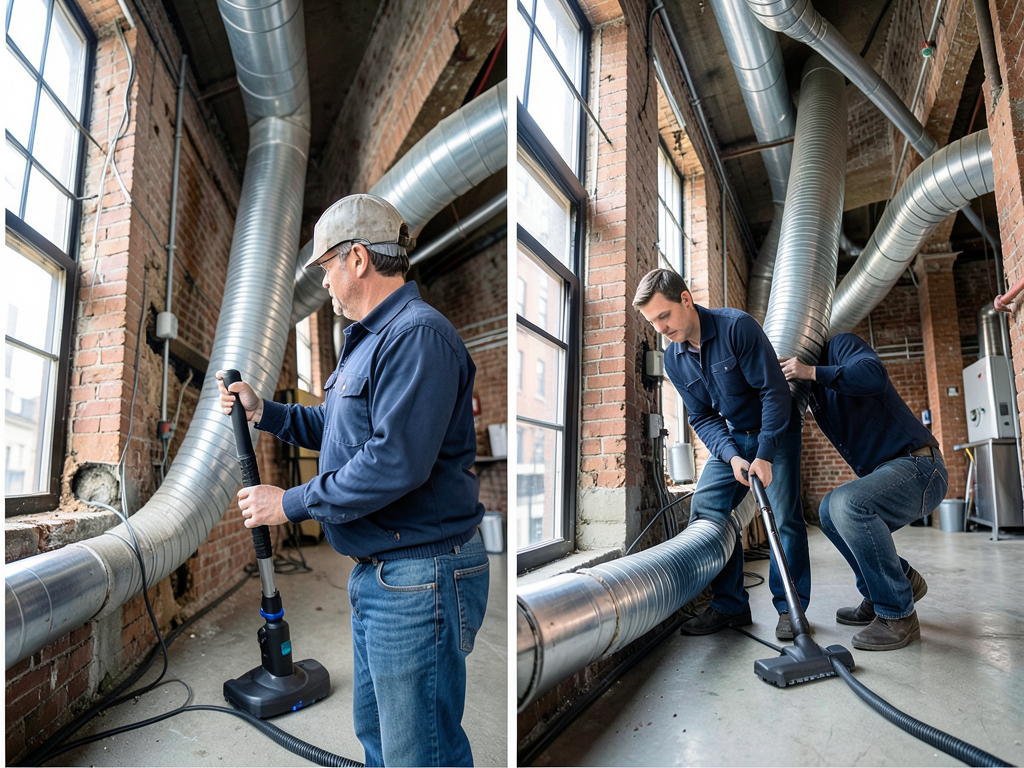
The cleaning itself uses specialized equipment. High-reach HEPA vacuums with soft brush attachments remove loose dust without scratching surfaces. For stubborn areas microfiber cloths with pH-neutral cleaners break down the sticky film left by condensation. Technicians work in sections cleaning from top to bottom to prevent recontamination. EPA guide on air duct cleaning.
Safety equipment is essential. Working around exposed ceiling structures requires harnesses and proper fall protection. Technicians also use drop cloths and plastic sheeting to protect your floors and furniture from falling debris. The process typically takes several hours depending on ceiling height and the extent of buildup.
Equipment and Safety for High-Ceiling Cleaning
Exposed ductwork in West Midtown lofts often sits 12 to 20 feet above the floor. That height requires specialized equipment for safe and effective cleaning. Standard ladders won’t cut it for these spaces. Specialized HVAC Solutions for Historic Virginia-Highland Homes.
Professional teams use scaffolding or scissor lifts to reach high areas safely. These provide stable platforms that let technicians work for extended periods without fatigue. For very high ceilings or complex layouts boom lifts might be necessary to access all areas.
Personal protective equipment includes safety harnesses when working at heights above 6 feet. Technicians also wear respirators to avoid inhaling dust disturbed during cleaning. Eye protection prevents debris from causing injuries during the process.. Read more about How to prevent mold growth in your Riverside air ducts and vents.
The equipment investment shows why DIY cleaning has limits. Without proper reach tools you cannot safely access all your ductwork surfaces. Missing spots means the buildup continues and your industrial aesthetic suffers. Professional teams bring the right tools for complete coverage.. Read more about Choosing the right MERV rating for your North Buckhead air filters.
DIY vs Professional Cleaning: When Height Matters
Low ceilings might allow for some DIY maintenance. If your exposed ducts sit 8 to 10 feet high you might reach them with an extension pole and microfiber duster. But Atlanta’s humidity means even accessible ducts develop sticky buildup that simple dusting cannot remove.
The real limitation comes with height. Once ducts sit above 10 feet DIY cleaning becomes unsafe. Extension poles lose effectiveness at extreme lengths. You cannot generate enough cleaning pressure to remove stuck-on grime. More importantly working on tall ladders with cleaning tools creates serious fall risks.
Professional cleaning becomes necessary when you notice these signs: visible dust accumulation despite regular cleaning; dark streaks or spots on metal surfaces; condensation marks that won’t wipe away; or increased dust in your living space that might be coming from your ducts.
The cost difference reflects the equipment and expertise involved. DIY might save money upfront but incomplete cleaning means you will need professional service sooner. Plus the safety risks of working at heights without proper equipment can lead to injuries that cost far more than professional cleaning.
Atlanta’s Humidity and Pollen Impact on Ductwork
Atlanta’s climate creates specific challenges for exposed ductwork that homeowners in drier climates don’t face. Our summer dew points often exceed 65°F which means metal surfaces stay cool enough to cause condensation even when air conditioning runs efficiently.
This moisture problem intensifies during spring pollen season. Pine pollen coats everything with a fine yellow dust that mixes with condensation to create a paste-like substance on duct surfaces. This combination is extremely difficult to remove with standard cleaning methods.
Fall brings another challenge. As outdoor temperatures drop interior metal ducts can sweat when warm indoor air contacts cooler metal. This seasonal sweating can cause dust to adhere more strongly requiring more aggressive cleaning methods.
Winter rarely causes freezing issues for indoor ductwork but it can create problems if your space has poor insulation. Cold drafts hitting exposed ducts can cause localized condensation that leads to water spots and mineral deposits.
Maintenance Schedules for Atlanta Properties
Professional cleaning frequency depends on your specific situation. Properties in West Midtown’s older industrial buildings might need cleaning every 6 to 12 months due to age and ventilation patterns. Newer constructions with better sealing might stretch to 18 months between professional services.
Seasonal factors influence your schedule. Schedule professional cleaning after spring pollen season ends to remove accumulated buildup. Consider another cleaning before holiday entertaining when you want your space looking its best.
Between professional cleanings use these maintenance steps: monthly dusting with microfiber tools; checking for moisture accumulation after humid periods; and inspecting for any signs of oxidation or paint damage on metal surfaces.
High-traffic commercial spaces need more frequent attention. Restaurants bars and retail spaces in West Midtown might require quarterly cleaning due to increased airborne particles from cooking customer traffic and outdoor air exchange. Commercial HVAC.
Raw vs Painted Ductwork Care
The finish on your ductwork determines your cleaning approach. Raw galvanized steel has a protective zinc coating but can still oxidize if cleaned with acidic products. Painted ducts offer more cleaning flexibility but the paint can chip if abrasive tools are used.
For raw metal surfaces use only pH-neutral cleaners specifically designed for metal. Avoid vinegar or citrus-based products that can damage the protective coating. Microfiber cloths work best as they trap dust without scratching.
Painted surfaces can handle slightly more aggressive cleaning but still need care to prevent paint damage. Test any new cleaner on an inconspicuous area first. Use minimal water to prevent moisture from seeping under paint edges.
Some property owners choose to seal raw metal with clear protective coatings. This makes cleaning easier but changes the industrial aesthetic. The sealant prevents oxidation but also prevents the natural patina that many find appealing in exposed ductwork.
Local Case Studies in West Midtown
West Midtown’s conversion of old warehouses into loft spaces created many properties with exposed ductwork. The White Provision development for example features buildings with 15-foot ceilings and extensive spiral duct systems that require specialized cleaning approaches.
Older buildings along Northside Drive present different challenges. Their original HVAC systems often have decades of dust accumulation in exposed ducts. Professional cleaning for these spaces requires careful assessment to avoid damaging aged metal surfaces.
Newer developments in the area like those near the Atlanta Tech Village often use painted ductwork for a more refined industrial look. These require different cleaning products than raw galvanized steel to maintain their finish.
The common factor across all these properties is Atlanta’s humidity. Whether the building is from the 1920s or 2020s moisture management remains the primary concern for maintaining clean exposed ductwork.
Cost Factors for Professional Cleaning
Several factors determine the cost of professional exposed ductwork cleaning. Ceiling height is the biggest factor since it determines the equipment needed. Cleaning ducts at 12 feet costs less than accessing ducts at 18 feet. Comparing Costs for a New AC Unit in Sandy Springs.
The extent of buildup affects pricing too. Light dust requires less time than removing years of accumulated grime mixed with condensation residue. The number of linear feet of exposed duct also impacts cost since more surface area means more cleaning time.
Building access matters. Ground floor spaces are easier to service than upper floor units that might require elevator reservations or special parking for equipment. Some buildings have restrictions on when cleaning can occur which might affect scheduling and pricing.
Most professional cleaning for exposed ductwork in Atlanta ranges from $800 to $2500 depending on these factors. Getting quotes from multiple providers helps ensure competitive pricing for your specific situation.
Preventing Future Buildup
Once your ductwork is clean prevention becomes the focus. Improving indoor air quality reduces the dust that settles on exposed surfaces. High-quality air filters in your HVAC system capture more particles before they can accumulate on ducts.
Humidity control helps prevent condensation. If your space consistently shows moisture on ducts consider a dehumidifier or have your HVAC system checked for proper sizing. Oversized air conditioners can short cycle causing humidity problems.
Air purifiers with HEPA filters can reduce airborne particles that would otherwise settle on your ducts. Place units near return air vents to maximize particle capture before air circulates through your system.
Regular filter changes every 60 to 90 days during peak usage seasons keep your system running efficiently and reduce dust circulation. This simple step extends the time between professional cleanings.
Finding the Right Service Provider
Not all HVAC companies handle exposed ductwork cleaning. Look for providers with experience in commercial and industrial cleaning. They should have proper insurance for working at heights and references from similar properties in West Midtown.
Ask about their cleaning process and products. Reputable companies will explain their methods and provide safety documentation. They should also offer a satisfaction guarantee and be willing to address any concerns after the cleaning.
Check reviews specifically for exposed ductwork work not just general HVAC service. Photos of before and after results can help verify their expertise with industrial aesthetics.
Professional certification matters. Look for technicians certified by NADCA (National Air Duct Cleaners Association) or similar organizations. This ensures they follow industry best practices for both cleaning effectiveness and safety. NADCA (National Air Duct Cleaners Association).
Frequently Asked Questions
How often should I clean exposed ductwork in Atlanta?
Most Atlanta properties need professional cleaning every 12 to 18 months. High humidity areas or properties near busy streets might need cleaning every 6 to 12 months. Watch for visible dust accumulation or moisture spots as signs it is time for service.
Can I clean exposed ductwork myself?
You can dust accessible areas with microfiber tools but DIY cleaning has serious limitations. Heights above 10 feet create safety risks. Atlanta’s humidity causes sticky buildup that requires professional cleaning products and techniques. Professional service ensures complete cleaning without damage.
Will cleaning my exposed ducts improve air quality?
Yes cleaning removes dust and allergens that accumulate on duct surfaces. This prevents particles from circulating when your HVAC runs. However the biggest air quality improvements come from proper filtration and humidity control throughout your entire system.
What causes the dark streaks on my metal ducts?
Dark streaks usually come from condensation mixing with dust and pollutants. This creates a sticky residue that darkens over time. In Atlanta high humidity accelerates this process. The streaks often indicate your space needs better humidity control or more frequent cleaning.
How much does professional exposed ductwork cleaning cost?
Costs vary based on ceiling height extent of buildup and linear feet of duct. Most Atlanta properties pay between $800 and $2500. Ground floor units with 12-foot ceilings cost less than upper floor spaces with 18-foot exposed ducts. Always get detailed quotes before service.
Keeping Your Industrial Aesthetic Sharp
Exposed ductwork represents a design choice that requires ongoing maintenance to preserve its appeal. In Atlanta’s challenging climate that maintenance goes beyond simple dusting. The combination of high humidity pollen and urban dust creates conditions that demand professional attention.
Understanding your specific challenges helps you develop the right maintenance plan. Whether you own a West Midtown loft or manage a commercial space in the area recognizing when DIY cleaning ends and professional service begins saves time and protects your investment.
The key is balancing the raw industrial look with practical maintenance needs. Clean ductwork enhances your space’s aesthetic while supporting healthy indoor air quality. With the right approach and professional help your exposed ducts can remain a design feature rather than an eyesore.
Ready to restore your exposed ductwork’s clean industrial look? Summit HVAC Atlanta specializes in professional exposed ductwork cleaning for West Midtown and surrounding Atlanta neighborhoods. Our certified technicians use specialized equipment to safely clean high-reach ducts while protecting your space and your investment. Call us today at (770) 600-9611 to schedule your consultation and keep your industrial aesthetic sharp year-round.
You may also find this helpful. Why you smell something burning when you turn on your Berkeley Park furnace.
{
“@context”: “https://schema.org”,
“@type”: “BlogPosting”,
“headline”: “Keeping Your Industrial Style Exposed Ductwork Clean and Dust Free in West Midtown”,
“description”: “Learn how to maintain clean exposed ductwork in Atlanta’s West Midtown lofts. Discover professional cleaning methods, humidity challenges, and local maintenance tips.”,
“wordCount”: 2325,
“datePublished”: “2026-05-17T06:11:00.000Z”,
“dateModified”: “2026-05-17T06:11:00.000Z”,
“inLanguage”: “en-US”,
“mainEntityOfPage”: {
“@type”: “WebPage”,
“@id”: “https://summithvacatlanta.com”
},
“publisher”: {
“@type”: “LocalBusiness”,
“name”: “Summit HVAC Atlanta”,
“url”: “https://summithvacatlanta.com”
},
“author”: {
“@type”: “Organization”,
“name”: “Summit HVAC Atlanta”,
“url”: “https://summithvacatlanta.com”
},
“image”: {
“@type”: “ImageObject”,
“url”: “https://summithvacatlanta.com/wp-content/uploads/2026/03/keeping-your-industrial-style-exposed-ductwork-cle-1.png”
}
}
{
“@context”: “https://schema.org”,
“@type”: “HVACBusiness”,
“name”: “Summit HVAC Atlanta”,
“url”: “https://summithvacatlanta.com”,
“address”: {
“@type”: “PostalAddress”,
“addressLocality”: “Atlanta”
},
“areaServed”: {
“@type”: “City”,
“name”: “Atlanta”
}
}
{
“@context”: “https://schema.org”,
“@type”: “FAQPage”,
“mainEntity”: [
{
“@type”: “Question”,
“name”: “How often should I clean exposed ductwork in Atlanta?”,
“acceptedAnswer”: {
“@type”: “Answer”,
“text”: “Most Atlanta properties need professional cleaning every 12 to 18 months. High humidity areas or properties near busy streets might need cleaning every 6 to 12 months. Watch for visible dust accumulation or moisture spots as signs it is time for service.”
}
},
{
“@type”: “Question”,
“name”: “Can I clean exposed ductwork myself?”,
“acceptedAnswer”: {
“@type”: “Answer”,
“text”: “You can dust accessible areas with microfiber tools but DIY cleaning has serious limitations. Heights above 10 feet create safety risks. Atlanta’s humidity causes sticky buildup that requires professional cleaning products and techniques. Professional service ensures complete cleaning without damage.”
}
},
{
“@type”: “Question”,
“name”: “Will cleaning my exposed ducts improve air quality?”,
“acceptedAnswer”: {
“@type”: “Answer”,
“text”: “Yes cleaning removes dust and allergens that accumulate on duct surfaces. This prevents particles from circulating when your HVAC runs. However the biggest air quality improvements come from proper filtration and humidity control throughout your entire system.”
}
},
{
“@type”: “Question”,
“name”: “What causes the dark streaks on my metal ducts?”,
“acceptedAnswer”: {
“@type”: “Answer”,
“text”: “Dark streaks usually come from condensation mixing with dust and pollutants. This creates a sticky residue that darkens over time. In Atlanta high humidity accelerates this process. The streaks often indicate your space needs better humidity control or more frequent cleaning.”
}
},
{
“@type”: “Question”,
“name”: “How much does professional exposed ductwork cleaning cost?”,
“acceptedAnswer”: {
“@type”: “Answer”,
“text”: “Costs vary based on ceiling height extent of buildup and linear feet of duct. Most Atlanta properties pay between $800 and $2500. Ground floor units with 12-foot ceilings cost less than upper floor spaces with 18-foot exposed ducts. Always get detailed quotes before service.”
}
}
]
}
{
“@context”: “https://schema.org”,
“@type”: “BreadcrumbList”,
“itemListElement”: [
{
“@type”: “ListItem”,
“position”: 1,
“name”: “Home”,
“item”: “https://summithvacatlanta.com”
},
{
“@type”: “ListItem”,
“position”: 2,
“name”: “Blog”,
“item”: “https://summithvacatlanta.com/blog”
},
{
“@type”: “ListItem”,
“position”: 3,
“name”: “Keeping Your Industrial Style Exposed Ductwork Clean and Dust Free in West Midtown”
}
]
}
{
“@context”: “https://schema.org”,
“@type”: “Service”,
“serviceType”: “HVAC”,
“provider”: {
“@type”: “LocalBusiness”,
“name”: “Summit HVAC Atlanta”,
“url”: “https://summithvacatlanta.com”
},
“areaServed”: {
“@type”: “City”,
“name”: “Atlanta”
},
“description”: “Learn how to maintain clean exposed ductwork in Atlanta’s West Midtown lofts. Discover professional cleaning methods, humidity challenges, and local maintenance tips.”
}