
The Atlanta Pine Pollen Problem Why Your AC is Suffocating
Every spring Atlanta transforms into a yellow haze. Pine pollen coats everything from cars to sidewalks and yes even your outdoor AC unit. That yellow blanket might look harmless but it’s actually suffocating your air conditioner. When pine pollen builds up on condenser coils it blocks airflow and forces your system to work harder. This means higher energy bills and a shorter lifespan for your unit. Energy Department AC maintenance guide.
Atlanta’s unique climate makes this problem worse. Our high humidity combined with the dense pine forests surrounding the city creates the perfect storm for pollen accumulation. Homes in neighborhoods like Brookhaven and Sandy Springs often see their AC units completely covered in yellow within days of the first warm spell.
The impact is real. A study by the Georgia Department of Natural Resources found that pollen can reduce AC efficiency by up to 30% during peak season. That means your system is running longer using more electricity and still struggling to keep your home cool. EPA guide to air cleaners and filters.

Safety First Preparing Your Unit for Cleaning
Before you grab a hose you need to think about safety. Your AC unit contains electrical components and moving parts that can cause serious injury if mishandled. The first step is always turning off power to the condenser.
Locate the disconnect box near your outdoor unit. This metal box usually sits on the wall or on a nearby post. Open the cover and either pull out the disconnect block or switch it to the off position. If you can’t find the disconnect turn off the circuit breaker that controls your AC at the main electrical panel.
Never attempt to clean your AC while it’s running. The fan blades spin fast enough to cause serious injury and the electrical components can deliver a dangerous shock. Give the unit at least 30 minutes to cool down before you start cleaning.
Wear protective gear. Pine pollen can irritate your eyes and skin. Use safety glasses gloves and a dust mask. If you have allergies consider wearing a respirator.
Step-by-Step How to Safely Wash Pine Pollen Off Your AC Coils
- Clear the Area
Remove any large debris around your unit. Pine needles twigs and leaves can trap moisture and create a perfect environment for mold growth. Trim back any vegetation to maintain at least two feet of clearance on all sides.
- Remove Loose Pollen
Use a soft brush or your gloved hand to gently remove the top layer of loose pollen. This prevents you from just pushing the pollen deeper into the coils when you start rinsing.
- Prepare Your Hose
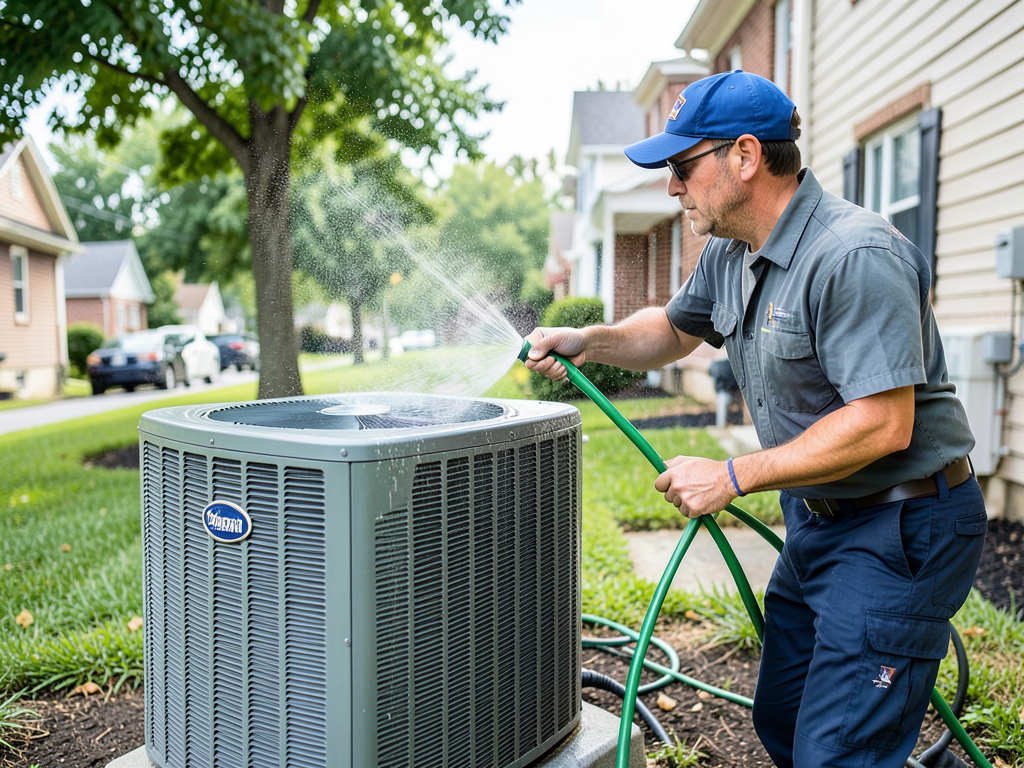
Attach a spray nozzle to your garden hose. Set it to a gentle spray pattern not a jet. You want enough pressure to dislodge pollen but not so much that you bend the aluminum fins.
- Rinse at the Right Angle
Start spraying from the top of the unit working your way down. Hold the nozzle at a 45-degree angle pointing downward. This helps the water and pollen flow out of the coils rather than deeper in.
- Work in Sections
Clean one section at a time. Pay extra attention to the areas where the coils bend or where debris tends to collect. These spots often harbor the most pollen.
- Check Your Progress
After rinsing inspect the coils. If you still see yellow residue you may need to repeat the process or use a specialized coil cleaner. Specialized HVAC Solutions for Historic Virginia-Highland Homes.
The Danger of DIY What NOT to Do
Many homeowners make critical mistakes when cleaning their AC coils. These errors can damage your unit void your warranty and even create safety hazards.
Never use a pressure washer. The high pressure can bend or crush the delicate aluminum fins that help transfer heat. Once these fins are damaged your AC loses efficiency and may overheat. A bent fin might not seem like a big deal but it can reduce airflow by up to 30%.
Avoid harsh chemicals. Household cleaners like bleach or ammonia can corrode the metal components and damage the coil coating. Even some commercial coil cleaners are too acidic for residential units. Stick to products specifically designed for HVAC coils. Commercial HVAC.
Don’t clean while the unit is running. This seems obvious but some people think a running AC will help dry the coils faster. Running the unit while wet can cause electrical shorts and potentially damage the compressor.
Skip the power tools. Wire brushes steel wool and other abrasive tools will scratch and damage the coil surface. Use only soft brushes or your gloved hand for stubborn spots.
Don’t ignore the disconnect. Working on a live electrical unit is extremely dangerous. Always verify the power is off before touching any components.
When to Call a Professional Atlanta HVAC Technician
Sometimes the yellow coating is more than just surface pollen. Pine trees produce a sticky resin that can bind pollen to your coils creating a stubborn layer that water alone won’t remove.. Read more about How the Massive Oak Trees in Poncey-Highland Can Actually Damage Your AC System.
If you notice these signs it’s time to call a professional:
- Your AC runs constantly but your home stays warm
- You see visible damage to the coil fins
- The unit makes unusual noises after cleaning
- You’ve tried cleaning twice but performance hasn’t improved
- Your energy bills spiked during pollen season
Professional technicians use specialized equipment like fin combs to straighten damaged coils and non-acidic coil cleaners that break down the sticky resin without harming the metal. They also check for other issues that might be affecting your system’s performance.
Many Atlanta HVAC companies offer spring maintenance packages specifically designed for pollen season. These services typically include coil cleaning refrigerant level checks and system performance testing. The cost is usually offset by the energy savings from a properly functioning unit. The Only HVAC Maintenance Plan Dunwoody Homeowners Actually Need.
Long-Term Pollen Protection Tips
Cleaning your coils once a year isn’t enough in Atlanta. The key to keeping your AC running efficiently is preventing pollen buildup in the first place.
Upgrade your air filter. Standard fiberglass filters catch only the largest particles. Consider a MERV 11-13 filter which can trap pollen and other allergens before they reach your outdoor unit. Just make sure your system can handle the increased airflow resistance.
Install a pre-filter screen. These mesh covers sit over your outdoor unit and catch pollen before it reaches the coils. They’re inexpensive and easy to clean with a garden hose.
Schedule professional maintenance twice a year. A spring tune-up before pollen season and a fall check-up prepare your system for Atlanta’s extreme weather swings. Regular maintenance can extend your AC’s life by 5-7 years.
Consider your landscaping. If possible plant low-pollen trees and shrubs at least 10 feet from your outdoor unit. This reduces the amount of pollen that can reach your coils.
Monitor your energy usage. Many utility companies offer free energy audits that can identify if your AC is working harder than it should. A sudden increase in energy consumption during pollen season often indicates dirty coils.
Understanding the Impact on Your Energy Bills
Clean AC coils don’t just improve cooling they save you money. When pollen blocks airflow your system runs longer to achieve the same temperature. This extra runtime shows up on your Georgia Power bill.
Here’s how dirty coils affect your costs:
| Coil Condition | Energy Usage | Estimated Monthly Cost Increase |
|---|---|---|
| Clean | Normal | Base Rate |
| Slightly Dirty | 15% Higher | $15-25 More |
| Moderately Dirty | 25% Higher | $25-40 More |
| Severely Dirty | 40%+ Higher | $40-70 More |
These numbers assume a typical Atlanta home using a 3-ton AC unit during peak cooling season. Your actual costs may vary based on your home size and usage patterns. Comparing Costs for a New AC Unit in Sandy Springs.
The good news is that cleaning your coils is one of the most cost-effective HVAC maintenance tasks. A simple rinse can pay for itself in energy savings within a month during heavy pollen season.
Protecting Your Investment
Your AC unit represents a significant investment often costing $3000-7000 for a complete system. Regular maintenance including pollen cleaning helps protect this investment.
Most manufacturers require annual professional maintenance to keep warranties valid. DIY cleaning is fine for basic maintenance but you should still schedule professional service to document your maintenance history.
Consider this: a system that runs efficiently for 15 years instead of 12 saves you the cost of one full replacement. At current prices that’s $3000-7000 in savings. Plus you avoid the inconvenience and discomfort of an unexpected breakdown during Atlanta’s hottest months.
Remember that pollen isn’t just a spring problem. Atlanta’s mild winters mean some pollen-producing plants release spores year-round. A quick visual check of your outdoor unit every month can help you catch problems before they affect your comfort or your wallet.
Frequently Asked Questions
How often should I clean my AC coils during pollen season?
During peak pollen season in Atlanta March through May you should check your coils every two weeks. Clean them when you see visible yellow buildup or if your AC seems to be running longer than usual.
Can I use my pressure washer on a low setting?
No. Even on the lowest setting pressure washers generate too much force for AC coils. The aluminum fins are delicate and easily bent. A garden hose with a spray nozzle provides plenty of cleaning power without the risk of damage.
Will cleaning my coils void my warranty?
Basic cleaning with a garden hose won’t void your warranty. However using harsh chemicals or damaging the unit could void coverage. Always check your warranty terms and consider having a professional document any maintenance work.
How do I know if my coils need professional cleaning?
If you’ve cleaned your coils twice but still notice reduced cooling performance unusual noises or higher energy bills it’s time to call a professional. They can check for issues like refrigerant leaks or electrical problems that might be causing your symptoms.
Is there a way to prevent pollen from sticking to my coils?
Yes. Installing a pre-filter screen over your outdoor unit can catch most pollen before it reaches the coils. These screens are inexpensive and easy to clean. You can also spray your coils with a garden hose every few days during heavy pollen season to prevent buildup.
How much does professional coil cleaning cost in Atlanta?
Professional coil cleaning typically costs $75-150 in the Atlanta area depending on your system size and the severity of the buildup. Many companies offer spring maintenance packages that include coil cleaning along with other services for $150-250.
Can dirty coils damage my AC compressor?
Yes. When coils are dirty the system can’t release heat efficiently. This causes the compressor to work harder and run hotter which can lead to premature failure. In extreme cases dirty coils can cause the compressor to overheat and shut down completely.
Don’t let Atlanta’s famous yellow haze turn your AC into an expensive lawn ornament. A few minutes of preventive maintenance can keep your system running efficiently all season long. If you’re unsure about cleaning your coils yourself or if you’ve noticed performance issues call Summit HVAC Atlanta at (770) 600-9611. Our NATE-certified technicians know exactly how to handle Atlanta’s unique pollen challenges and can have your system running at peak efficiency in no time.
Remember a clean AC isn’t just about comfort it’s about protecting your investment and keeping your energy bills under control. Take action now before the next pollen storm hits and enjoy a cooler more comfortable home all summer long.
You may also find this helpful. Why your Sylvan Hills AC is blowing warm air right when you need it most.
{
“@context”: “https://schema.org”,
“@type”: “BlogPosting”,
“headline”: “Cleaning the Yellow Pine Pollen Off Your AC Coils Without Damaging the Unit”,
“description”: “Learn how to safely remove yellow pine pollen from your AC coils in Atlanta. Expert tips to improve efficiency without damaging your HVAC system.”,
“wordCount”: 1935,
“datePublished”: “2026-05-15T14:51:00.000Z”,
“dateModified”: “2026-05-15T14:51:00.000Z”,
“inLanguage”: “en-US”,
“mainEntityOfPage”: {
“@type”: “WebPage”,
“@id”: “https://summithvacatlanta.com”
},
“publisher”: {
“@type”: “LocalBusiness”,
“name”: “Summit HVAC Atlanta”,
“url”: “https://summithvacatlanta.com”
},
“author”: {
“@type”: “Organization”,
“name”: “Summit HVAC Atlanta”,
“url”: “https://summithvacatlanta.com”
},
“image”: {
“@type”: “ImageObject”,
“url”: “https://summithvacatlanta.com/wp-content/uploads/2026/03/cleaning-the-yellow-pine-pollen-off-your-ac-coils-1.png”
}
}
{
“@context”: “https://schema.org”,
“@type”: “HVACBusiness”,
“name”: “Summit HVAC Atlanta”,
“url”: “https://summithvacatlanta.com”,
“address”: {
“@type”: “PostalAddress”,
“addressLocality”: “Atlanta”
},
“areaServed”: {
“@type”: “City”,
“name”: “Atlanta”
}
}
{
“@context”: “https://schema.org”,
“@type”: “FAQPage”,
“mainEntity”: [
{
“@type”: “Question”,
“name”: “How often should I clean my AC coils during pollen season?”,
“acceptedAnswer”: {
“@type”: “Answer”,
“text”: “During peak pollen season in Atlanta March through May you should check your coils every two weeks. Clean them when you see visible yellow buildup or if your AC seems to be running longer than usual.”
}
},
{
“@type”: “Question”,
“name”: “Can I use my pressure washer on a low setting?”,
“acceptedAnswer”: {
“@type”: “Answer”,
“text”: “No. Even on the lowest setting pressure washers generate too much force for AC coils. The aluminum fins are delicate and easily bent. A garden hose with a spray nozzle provides plenty of cleaning power without the risk of damage.”
}
},
{
“@type”: “Question”,
“name”: “Will cleaning my coils void my warranty?”,
“acceptedAnswer”: {
“@type”: “Answer”,
“text”: “Basic cleaning with a garden hose won’t void your warranty. However using harsh chemicals or damaging the unit could void coverage. Always check your warranty terms and consider having a professional document any maintenance work.”
}
},
{
“@type”: “Question”,
“name”: “How do I know if my coils need professional cleaning?”,
“acceptedAnswer”: {
“@type”: “Answer”,
“text”: “If you’ve cleaned your coils twice but still notice reduced cooling performance unusual noises or higher energy bills it’s time to call a professional. They can check for issues like refrigerant leaks or electrical problems that might be causing your symptoms.”
}
},
{
“@type”: “Question”,
“name”: “Is there a way to prevent pollen from sticking to my coils?”,
“acceptedAnswer”: {
“@type”: “Answer”,
“text”: “Yes. Installing a pre-filter screen over your outdoor unit can catch most pollen before it reaches the coils. These screens are inexpensive and easy to clean. You can also spray your coils with a garden hose every few days during heavy pollen season to prevent buildup.”
}
},
{
“@type”: “Question”,
“name”: “How much does professional coil cleaning cost in Atlanta?”,
“acceptedAnswer”: {
“@type”: “Answer”,
“text”: “Professional coil cleaning typically costs $75-150 in the Atlanta area depending on your system size and the severity of the buildup. Many companies offer spring maintenance packages that include coil cleaning along with other services for $150-250.”
}
},
{
“@type”: “Question”,
“name”: “Can dirty coils damage my AC compressor?”,
“acceptedAnswer”: {
“@type”: “Answer”,
“text”: “Yes. When coils are dirty the system can’t release heat efficiently. This causes the compressor to work harder and run hotter which can lead to premature failure. In extreme cases dirty coils can cause the compressor to overheat and shut down completely.”
}
}
]
}
{
“@context”: “https://schema.org”,
“@type”: “HowTo”,
“name”: “How to Clean AC Coils”,
“step”: [
{
“@type”: “HowToStep”,
“position”: 1,
“name”: “Clear the Area”,
“text”: “Remove any large debris around your unit. Pine needles twigs and leaves can trap moisture and create a perfect environment for mold growth. Trim back any vegetation to maintain at least two feet of clearance on all sides.”
},
{
“@type”: “HowToStep”,
“position”: 2,
“name”: “Remove Loose Pollen”,
“text”: “Use a soft brush or your gloved hand to gently remove the top layer of loose pollen. This prevents you from just pushing the pollen deeper into the coils when you start rinsing.”
},
{
“@type”: “HowToStep”,
“position”: 3,
“name”: “Prepare Your Hose”,
“text”: “Attach a spray nozzle to your garden hose. Set it to a gentle spray pattern not a jet. You want enough pressure to dislodge pollen but not so much that you bend the aluminum fins.”
},
{
“@type”: “HowToStep”,
“position”: 4,
“name”: “Rinse at the Right Angle”,
“text”: “Start spraying from the top of the unit working your way down. Hold the nozzle at a 45-degree angle pointing downward. This helps the water and pollen flow out of the coils rather than deeper in.”
},
{
“@type”: “HowToStep”,
“position”: 5,
“name”: “Work in Sections”,
“text”: “Clean one section at a time. Pay extra attention to the areas where the coils bend or where debris tends to collect. These spots often harbor the most pollen.”
},
{
“@type”: “HowToStep”,
“position”: 6,
“name”: “Check Your Progress”,
“text”: “After rinsing inspect the coils. If you still see yellow residue you may need to repeat the process or use a specialized coil cleaner. Specialized HVAC Solutions for Historic Virginia-Highland Homes.”
}
],
“image”: “https://summithvacatlanta.com/wp-content/uploads/2026/03/cleaning-the-yellow-pine-pollen-off-your-ac-coils-1.png”
}
{
“@context”: “https://schema.org”,
“@type”: “BreadcrumbList”,
“itemListElement”: [
{
“@type”: “ListItem”,
“position”: 1,
“name”: “Home”,
“item”: “https://summithvacatlanta.com”
},
{
“@type”: “ListItem”,
“position”: 2,
“name”: “Blog”,
“item”: “https://summithvacatlanta.com/blog”
},
{
“@type”: “ListItem”,
“position”: 3,
“name”: “Cleaning the Yellow Pine Pollen Off Your AC Coils Without Damaging the Unit”
}
]
}
{
“@context”: “https://schema.org”,
“@type”: “Service”,
“serviceType”: “HVAC”,
“provider”: {
“@type”: “LocalBusiness”,
“name”: “Summit HVAC Atlanta”,
“url”: “https://summithvacatlanta.com”
},
“areaServed”: {
“@type”: “City”,
“name”: “Atlanta”
},
“description”: “Learn how to safely remove yellow pine pollen from your AC coils in Atlanta. Expert tips to improve efficiency without damaging your HVAC system.”
}