
Solar Attic Fans vs Ridge Vents for Your North Decatur Home
Your attic can reach 150 degrees on a July afternoon in North Decatur. That heat bakes your ceiling and forces your air conditioner to work overtime. The right ventilation system can cut those temperatures by 30 degrees or more. But which system works best for your home? A solar attic fan or a ridge vent?
North Decatur homes face unique challenges. The humid subtropical climate means your attic deals with both extreme heat and moisture. The wrong ventilation choice can lead to mold growth, premature shingle failure, and higher energy bills. This guide breaks down the facts so you can make the right choice for your home.
How These Two Systems Actually Work
Solar attic fans and ridge vents represent two completely different approaches to attic ventilation. Understanding the physics behind each system helps you see why one might work better than the other.
Ridge vents work through passive ventilation. They run along the peak of your roof, creating a continuous opening covered by a weatherproof cap. As hot air rises naturally, it escapes through these vents. The system depends on wind and the natural stack effect to move air. No electricity. No moving parts. Just physics.. Read more about Making the Move to a Fully Electric Home in Decatur.
Solar attic fans use active ventilation. A small solar panel mounted on your roof powers a fan that actively pulls hot air out of your attic. The fan creates negative pressure that draws in cooler air from soffit vents along your eaves. This continuous airflow can move 800 to 1,500 cubic feet of air per minute.. Read more about Optimizing Airflow for Classic Brick Ranch Homes in East Point.
The key difference? Ridge vents wait for hot air to rise and escape. Solar fans force air movement regardless of temperature or wind conditions.
The North Decatur Climate Factor
North Decatur sits in the heart of Atlanta’s humid subtropical climate zone. Summer days regularly hit 95 degrees with humidity above 70 percent. These conditions create unique attic challenges that affect ventilation performance.
High humidity means moisture constantly tries to enter your attic. It comes through ceiling penetrations, air leaks around ductwork, and even through your insulation. Once inside, this moisture can condense on cool attic surfaces during evening temperature drops.
The Georgia heat also affects roofing materials differently than cooler climates. Asphalt shingles absorb heat and transfer it to your attic decking. Without proper ventilation, this heat can warp decking and shorten shingle life by years. Georgia State Minimum Standard Mechanical Code.
North Decatur’s older homes, particularly those built before 1980, often lack adequate soffit ventilation. This creates a critical problem for ridge vents. Without proper intake air, ridge vents become passive air intakes rather than exhaust vents.
Ridge Vents in North Decatur Homes
Ridge vents work best when your attic has balanced ventilation. This means you need one square foot of net free area for every 150 square feet of attic space. Half should come from intake vents (soffits) and half from exhaust vents (ridge).
Many North Decatur homes fall short of this ideal. The area’s architectural diversity includes historic craftsman bungalows in Druid Hills and mid-century ranches in Oakhurst. These older homes often have small or blocked soffit vents that limit ridge vent effectiveness.
Ridge vents offer several advantages for local homeowners. They operate silently 24/7 without electricity. Installation costs typically range from $400 to $800 for an average home. They last 20 to 30 years with minimal maintenance. The continuous design works with any roof pitch common in North Decatur. Comparing Costs for a New AC Unit in Sandy Springs.
However, ridge vents have limitations in our climate. They depend on temperature differences to create airflow. On still, hot nights when attic temperatures barely drop below outdoor temperatures, ridge vents move very little air. This can allow moisture to accumulate in your insulation.
Another issue affects homes with complex roof designs. North Decatur’s architectural variety includes homes with multiple roof levels, dormers, and intersecting planes. These features can create dead air zones where ridge vents cannot effectively remove heat.
Solar Attic Fans for Atlanta’s Heat
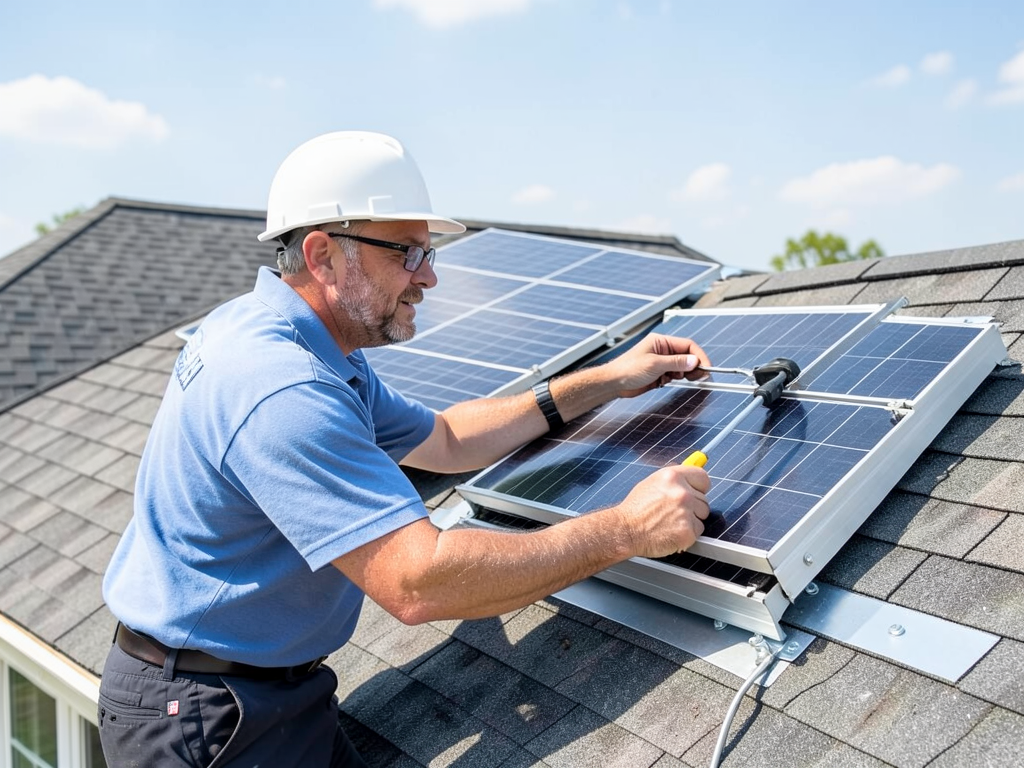
Solar attic fans provide active ventilation that works regardless of wind or temperature conditions. When the sun hits your roof, the solar panel powers the fan motor. This creates immediate airflow that can drop attic temperatures by 30 to 40 degrees.
For North Decatur homes, solar fans offer several climate-specific benefits. The active ventilation removes moisture-laden air before it can condense. This reduces the risk of mold growth on attic sheathing and insulation. The continuous airflow also helps prevent ice dam formation during rare cold snaps.
Modern solar fans include features that work well in Georgia’s climate. Many models have adjustable thermostats that only activate when attic temperatures exceed 80 degrees. Some include humidistats that respond to moisture levels. These controls prevent unnecessary operation during mild weather.
Installation costs for solar attic fans range from $500 to $1,200 per fan, depending on quality and installation complexity. Most homes need one fan for every 1,500 square feet of attic space. The federal solar tax credit currently covers 30 percent of the installed cost, making the effective price more competitive. Improving the Air Quality in Your Brookhaven Home During Pollen Season.
The main limitation of solar fans is their dependence on sunlight. They produce maximum airflow during peak sun hours when your attic needs it most. However, they provide little benefit during early morning or late evening hours when moisture can accumulate.
Head-to-Head Performance Comparison
Performance data from Atlanta-area homes shows clear differences between these systems under local conditions.
Temperature reduction represents the most obvious performance metric. Solar fans typically lower peak attic temperatures by 30 to 40 degrees. Ridge vents achieve 15 to 25 degrees of reduction, but only when wind conditions favor airflow.
Moisture control shows an even bigger performance gap. Solar fans actively remove humid air, maintaining attic relative humidity below 60 percent. Ridge vents often allow humidity to climb above 70 percent on still summer nights, creating conditions favorable for mold growth.
Energy savings vary significantly between systems. Homes with solar fans report 10 to 15 percent reductions in cooling costs. Ridge vent homes see 5 to 8 percent savings, but only when the system works properly.
Noise levels differ substantially. Ridge vents operate silently. Solar fans produce 30 to 45 decibels of noise, similar to a quiet conversation. Most homeowners report this noise is barely noticeable from inside the living space.
Maintenance requirements also vary. Ridge vents need inspection every few years to ensure openings remain clear. Solar fans require annual cleaning of the solar panel and occasional motor lubrication. The fan’s moving parts mean a typical lifespan of 10 to 15 years versus 20 to 30 years for ridge vents. The Only HVAC Maintenance Plan Dunwoody Homeowners Actually Need.
| Performance Factor | Solar Attic Fan | Ridge Vent |
|---|---|---|
| Peak Temperature Reduction | 30-40°F | 15-25°F |
| Humidity Control | Active (below 60%) | Passive (often above 70%) |
| Energy Savings | 10-15% cooling costs | 5-8% cooling costs |
| Lifespan | 10-15 years | 20-30 years |
| Noise Level | 30-45 dB | Silent |
| Installation Cost | $500-1,200 per fan | $400-800 total |
The Critical Soffit Vent Requirement
Both systems depend on proper intake ventilation through soffit vents. Without adequate soffit ventilation, neither system works effectively. This represents the most overlooked factor in attic ventilation decisions.
Soffit vents provide the cool air that replacement ventilation systems pull from your attic. The general rule requires one square foot of net free area for every 300 square feet of attic floor space. Half should come from soffits and half from exhaust vents.. Read more about Why the Third Floor of Your Smyrna Townhome is Always Unbearably Hot.
Many North Decatur homes have inadequate soffit ventilation. Vinyl or aluminum soffits often cover original wood soffits that lack vent openings. Some homes have vents, but insulation blocks the airflow path into the attic.
Checking your soffit ventilation requires looking under your eaves. You should see evenly spaced vent openings along the entire soffit length. If you see solid material, your attic lacks proper intake ventilation.
Adding soffit vents costs $300 to $600 per 1,000 square feet of attic area. This expense applies whether you choose a solar fan or ridge vent. Without proper soffits, neither system provides the ventilation your attic needs.
The Short-Circuiting Problem
A common mistake occurs when homeowners install solar fans without understanding attic airflow dynamics. If a solar fan and ridge vent exist on the same roof plane, the fan can pull air directly from the ridge vent instead of drawing from soffit vents.
This creates a short circuit that dramatically reduces ventilation effectiveness. Instead of moving air through your entire attic, the fan simply exchanges air between two nearby points. Your attic temperatures remain high and moisture problems persist.
Preventing short-circuiting requires careful fan placement. The fan should be at least 10 feet from any ridge vent or other exhaust opening. In complex roof designs common in North Decatur, this may not be possible without major modifications.
Another short-circuiting scenario occurs when multiple solar fans create competing airflow paths. Fans placed too close together can pull air from each other’s intake zones rather than drawing from soffits.
Impact on HVAC System Performance
Your attic ventilation choice affects your entire HVAC system’s performance. The temperature difference between your attic and living space determines how much heat transfers through your ceiling insulation.
With a 150-degree attic and 75-degree living space, you have a 75-degree temperature differential. This drives heat transfer through your ceiling at maximum rate. Lowering attic temperature to 110 degrees reduces the differential to 35 degrees, cutting heat transfer by nearly half.
This reduction means your air conditioner runs less frequently and for shorter cycles. A study of Atlanta-area homes showed HVAC systems in well-ventilated attics ran 25 percent fewer cycles during peak summer months.
The moisture control aspect also affects HVAC performance. High attic humidity forces your air conditioner to work harder dehumidifying indoor air. When attic humidity stays below 60 percent, your AC can focus on cooling rather than moisture removal.
Another factor involves ductwork located in your attic. In North Decatur’s older homes, ductwork often runs through unconditioned attic space. Solar fans keep this ductwork cooler, reducing the temperature of air entering your vents by 10 to 15 degrees.
Local Building Code Requirements
Georgia building codes require specific ventilation ratios for new construction and major renovations. The International Residential Code adopted by Georgia requires one square foot of net free area per 150 square feet of attic floor area when no vapor barrier exists.
Local enforcement in DeKalb County, which includes North Decatur, generally follows these state requirements. However, homes built before 2000 may not meet current standards even if they had adequate ventilation for their original construction.
Solar attic fans must be UL-listed for the application and installed according to manufacturer specifications. The National Fire Protection Association requires minimum clearance between fans and any roof-mounted equipment to prevent fire spread.
Ridge vents must meet specific wind ratings for the area. North Decatur falls in a zone requiring vents to withstand 130 mph wind loads. Most quality ridge vents exceed this requirement, but inexpensive options may not comply.. Read more about Exploring solar-ready HVAC options for eco-conscious homeowners in Cascade Heights.
Neither system requires a building permit for replacement, but both need permits for new installations or major modifications. The permitting process ensures compliance with current energy codes and prevents moisture-related structural damage.
Cost-Benefit Analysis for North Decatur Homeowners
The true cost of attic ventilation extends beyond installation price. You must consider energy savings, equipment longevity, and potential moisture damage when calculating return on investment.
Energy savings provide the most immediate return. A solar fan costing $1,000 installed can save $150 to $250 annually on cooling costs. This represents a simple payback period of four to seven years. The federal tax credit reduces this to three to five years.
Ridge vents cost less upfront but provide smaller energy savings. A $600 installation might save $75 to $125 annually, extending payback to five to eight years. However, the longer lifespan means you may only replace ridge vents once during your home ownership versus twice for solar fans.
Moisture damage prevention offers another financial consideration. Mold remediation in attics costs $2,000 to $5,000. Shingle replacement due to heat damage runs $5,000 to $12,000. Both risks increase significantly without proper ventilation.
Insurance considerations also matter. Some policies offer premium discounts for homes with certified ventilation systems. Others may deny claims related to moisture damage if ventilation does not meet code requirements.
The table below summarizes typical costs and savings for an average North Decatur home:
| Cost Factor | Solar Fan System | Ridge Vent System |
|---|---|---|
| Installation Cost | $1,200-1,800 | $600-1,000 |
| Federal Tax Credit | -$360-540 | $0 | Annual Energy Savings | $150-250 | $75-125 |
| Maintenance Cost (10 yrs) | $200-400 | $100-200 |
| 10-Year Net Cost | $-1,110 to $-690 | $-350 to $-550 |
Making the Right Choice for Your Home
Your home’s specific characteristics should drive your ventilation decision. Consider these factors when evaluating which system works best for your situation.
Attic square footage determines how much ventilation you need. Homes over 2,000 square feet typically require multiple solar fans or ridge vents along the entire roof peak. A single fan cannot effectively ventilate a large attic.
Roof design affects system performance. Simple gable roofs work well with either system. Complex hip roofs with multiple valleys may trap hot air in dead zones, making active ventilation more effective.
Existing ventilation infrastructure matters significantly. If your home already has ridge vents but lacks soffit ventilation, adding solar fans often provides better improvement than adding more ridge vents.
Energy rates in your area affect payback calculations. With Georgia Power’s current rates around 12 cents per kilowatt-hour, the energy savings from active ventilation become more attractive compared to areas with lower electricity costs.
Your tolerance for maintenance also influences the decision. Solar fans need annual cleaning and occasional motor replacement. Ridge vents need inspection but rarely require service during their lifespan.
Climate change considerations may affect your choice. Atlanta’s summer temperatures have increased by nearly 3 degrees over the past 30 years. Active ventilation systems provide more reliable performance as extreme heat events become more common.
Professional Installation Considerations
Proper installation determines whether your ventilation system succeeds or fails. Both solar fans and ridge vents require specific techniques to function correctly.
Solar fan installation involves roof penetration that must be flashed properly to prevent leaks. The fan mounting bracket should attach to roof rafters, not just decking. Improper installation creates leak points that damage your ceiling.
The solar panel orientation affects performance. In North Decatur, panels should face south or southwest for maximum sun exposure. Shading from trees or nearby structures can reduce fan effectiveness by 50 percent or more.
Ridge vent installation requires removing the existing ridge shingles and cutting a slot along the roof peak. This slot must be the correct width and depth to provide adequate net free area. Too narrow, and the vent cannot move enough air. Too wide, and it becomes vulnerable to wind-driven rain.
Both systems require proper sealing at all penetrations. Roof sealant must be compatible with your roofing material. Some sealants degrade when in contact with certain asphalt shingles, creating future leak points.
Professional installers should provide ventilation calculations showing your system meets the required net free area. They should also explain how they addressed potential short-circuiting issues and ensured proper soffit intake.
Frequently Asked Questions
Can I install both a solar fan and ridge vents?
Installing both systems often creates more problems than it solves. The solar fan can pull air from the ridge vent instead of from soffits, creating a short circuit. If you want to upgrade from ridge vents, remove the existing ridge vents before installing solar fans.
How do I know if my attic has enough ventilation?
Check for these signs of inadequate ventilation: attic temperatures above 130 degrees on sunny days, moisture or frost on attic surfaces during cold weather, ice dam formation along roof edges in winter, and curling or buckling shingles. A professional can measure your actual ventilation rates.
Will solar attic fans work during power outages?
Yes. Solar attic fans operate independently of your home’s electrical system. They continue working during power outages, which often occur during Atlanta’s summer thunderstorm season when ventilation is most needed.
How long do solar attic fans last in Georgia’s climate?
Quality solar attic fans typically last 10 to 15 years in Georgia. The harsh UV exposure and high humidity accelerate component wear compared to milder climates. Motors and bearings usually fail first, while solar panels often last longer than the fan mechanism.
Will improving attic ventilation void my shingle warranty?
Properly installed ventilation systems typically extend shingle life and maintain warranty coverage. Most asphalt shingle manufacturers require specific ventilation rates to honor their warranties. Inadequate ventilation can actually void warranties by causing premature shingle failure.
The Atlanta Verdict
For North Decatur homes, solar attic fans generally provide better performance in our specific climate conditions. The active ventilation effectively controls both heat and moisture, which are the primary attic challenges in the humid Southeast.
However, the best choice depends on your home’s specific characteristics. Homes with adequate passive ventilation and simple roof designs may find ridge vents sufficient. Homes with complex rooflines, inadequate soffit ventilation, or moisture problems benefit more from active solar ventilation.
Before making a decision, have a professional evaluate your current ventilation system. Many North Decatur homes have hidden ventilation problems that affect both energy efficiency and indoor comfort. The right assessment can identify whether you need to add soffit vents, upgrade to active ventilation, or simply maintain your existing system.
Proper attic ventilation represents one of the most cost-effective home improvements you can make. It reduces energy costs, extends roof life, prevents moisture damage, and improves indoor comfort. Whether you choose solar fans or ridge vents, ensuring your attic breathes properly pays dividends for years to come.
Ready to improve your attic ventilation? Call Summit HVAC Atlanta at (770) 600-9611 for a professional assessment. We’ll evaluate your specific home and recommend the ventilation solution that works best for your North Decatur property.
- Assess Your Current System
Check existing vents, measure attic temperature, and look for moisture signs. Many homes have hidden ventilation problems.
- Calculate Ventilation Requirements
Determine your attic’s net free area needs based on square footage. Most homes need more ventilation than they currently have.
- Evaluate Your Home’s Characteristics
Consider roof design, existing soffit ventilation, and whether you prefer active or passive systems.
- Compare Long-Term Costs
Factor in energy savings, maintenance, and potential moisture damage when calculating return on investment.
- Choose Professional Installation
Proper installation prevents leaks and ensures your system works as designed. This matters more than the specific product you choose. For more information, visit U.S. Department of Energy ventilation guide.
You may also find this helpful. Keeping Your Peachtree City Golf Cart Garage Cool and Dry.
You may also find this helpful. Why Your Spare Bedroom Office in Suwanee is Always Five Degrees Hotter Than the Rest of the House.
{
“@context”: “https://schema.org”,
“@type”: “BlogPosting”,
“headline”: “Solar Attic Fans vs Ridge Vents for Your North Decatur Home”,
“description”: “Discover which attic ventilation system works best for North Decatur homes. Compare solar attic fans vs ridge vents for energy efficiency and humidity control in Atlanta’s climate.”,
“wordCount”: 3101,
“datePublished”: “2026-06-03T15:31:00.000Z”,
“dateModified”: “2026-06-03T15:31:00.000Z”,
“inLanguage”: “en-US”,
“mainEntityOfPage”: {
“@type”: “WebPage”,
“@id”: “https://summithvacatlanta.com”
},
“publisher”: {
“@type”: “LocalBusiness”,
“name”: “Summit HVAC Atlanta”,
“url”: “https://summithvacatlanta.com”
},
“author”: {
“@type”: “Organization”,
“name”: “Summit HVAC Atlanta”,
“url”: “https://summithvacatlanta.com”
},
“image”: {
“@type”: “ImageObject”,
“url”: “https://summithvacatlanta.com/wp-content/uploads/2026/03/solar-attic-fans-vs-ridge-vents-for-your-north-dec-1.png”
}
}
{
“@context”: “https://schema.org”,
“@type”: “HVACBusiness”,
“name”: “Summit HVAC Atlanta”,
“url”: “https://summithvacatlanta.com”,
“address”: {
“@type”: “PostalAddress”,
“addressLocality”: “Atlanta”
},
“areaServed”: {
“@type”: “City”,
“name”: “Atlanta”
}
}
{
“@context”: “https://schema.org”,
“@type”: “FAQPage”,
“mainEntity”: [
{
“@type”: “Question”,
“name”: “Can I install both a solar fan and ridge vents?”,
“acceptedAnswer”: {
“@type”: “Answer”,
“text”: “Installing both systems often creates more problems than it solves. The solar fan can pull air from the ridge vent instead of from soffits, creating a short circuit. If you want to upgrade from ridge vents, remove the existing ridge vents before installing solar fans.”
}
},
{
“@type”: “Question”,
“name”: “How do I know if my attic has enough ventilation?”,
“acceptedAnswer”: {
“@type”: “Answer”,
“text”: “Check for these signs of inadequate ventilation: attic temperatures above 130 degrees on sunny days, moisture or frost on attic surfaces during cold weather, ice dam formation along roof edges in winter, and curling or buckling shingles. A professional can measure your actual ventilation rates.”
}
},
{
“@type”: “Question”,
“name”: “Will solar attic fans work during power outages?”,
“acceptedAnswer”: {
“@type”: “Answer”,
“text”: “Yes. Solar attic fans operate independently of your home’s electrical system. They continue working during power outages, which often occur during Atlanta’s summer thunderstorm season when ventilation is most needed.”
}
},
{
“@type”: “Question”,
“name”: “How long do solar attic fans last in Georgia’s climate?”,
“acceptedAnswer”: {
“@type”: “Answer”,
“text”: “Quality solar attic fans typically last 10 to 15 years in Georgia. The harsh UV exposure and high humidity accelerate component wear compared to milder climates. Motors and bearings usually fail first, while solar panels often last longer than the fan mechanism.”
}
},
{
“@type”: “Question”,
“name”: “Will improving attic ventilation void my shingle warranty?”,
“acceptedAnswer”: {
“@type”: “Answer”,
“text”: “Properly installed ventilation systems typically extend shingle life and maintain warranty coverage. Most asphalt shingle manufacturers require specific ventilation rates to honor their warranties. Inadequate ventilation can actually void warranties by causing premature shingle failure.”
}
}
]
}
{
“@context”: “https://schema.org”,
“@type”: “HowTo”,
“name”: “How to Choose Your Attic Ventilation”,
“step”: [
{
“@type”: “HowToStep”,
“position”: 1,
“name”: “Assess Your Current System”,
“text”: “Check existing vents, measure attic temperature, and look for moisture signs. Many homes have hidden ventilation problems.”
},
{
“@type”: “HowToStep”,
“position”: 2,
“name”: “Calculate Ventilation Requirements”,
“text”: “Determine your attic’s net free area needs based on square footage. Most homes need more ventilation than they currently have.”
},
{
“@type”: “HowToStep”,
“position”: 3,
“name”: “Evaluate Your Home’s Characteristics”,
“text”: “Consider roof design, existing soffit ventilation, and whether you prefer active or passive systems.”
},
{
“@type”: “HowToStep”,
“position”: 4,
“name”: “Compare Long-Term Costs”,
“text”: “Factor in energy savings, maintenance, and potential moisture damage when calculating return on investment.”
},
{
“@type”: “HowToStep”,
“position”: 5,
“name”: “Choose Professional Installation”,
“text”: “Proper installation prevents leaks and ensures your system works as designed. This matters more than the specific product you choose. For more information, visit U.S. Department of Energy ventilation guide.”
}
],
“image”: “https://summithvacatlanta.com/wp-content/uploads/2026/03/solar-attic-fans-vs-ridge-vents-for-your-north-dec-1.png”
}
{
“@context”: “https://schema.org”,
“@type”: “BreadcrumbList”,
“itemListElement”: [
{
“@type”: “ListItem”,
“position”: 1,
“name”: “Home”,
“item”: “https://summithvacatlanta.com”
},
{
“@type”: “ListItem”,
“position”: 2,
“name”: “Blog”,
“item”: “https://summithvacatlanta.com/blog”
},
{
“@type”: “ListItem”,
“position”: 3,
“name”: “Solar Attic Fans vs Ridge Vents for Your North Decatur Home”
}
]
}
{
“@context”: “https://schema.org”,
“@type”: “Service”,
“serviceType”: “HVAC”,
“provider”: {
“@type”: “LocalBusiness”,
“name”: “Summit HVAC Atlanta”,
“url”: “https://summithvacatlanta.com”
},
“areaServed”: {
“@type”: “City”,
“name”: “Atlanta”
},
“description”: “Discover which attic ventilation system works best for North Decatur homes. Compare solar attic fans vs ridge vents for energy efficiency and humidity control in Atlanta’s climate.”
}